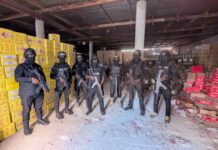


A disturbing cross-border human trafficking network allegedly involving politicians, immigration officers, retired security personnel and civilians has been uncovered in Nigeria, exposing what investigators describe as modern-day slavery camps holding thousands of victims from across West Africa.
The revelations follow the arrest of ten suspectedtraffickers, including a constituency executive of a political party in Ghana and an immigration officer, during ongoing investigations into a sprawling trafficking operation linked to cybercrime activities in Nigeria.
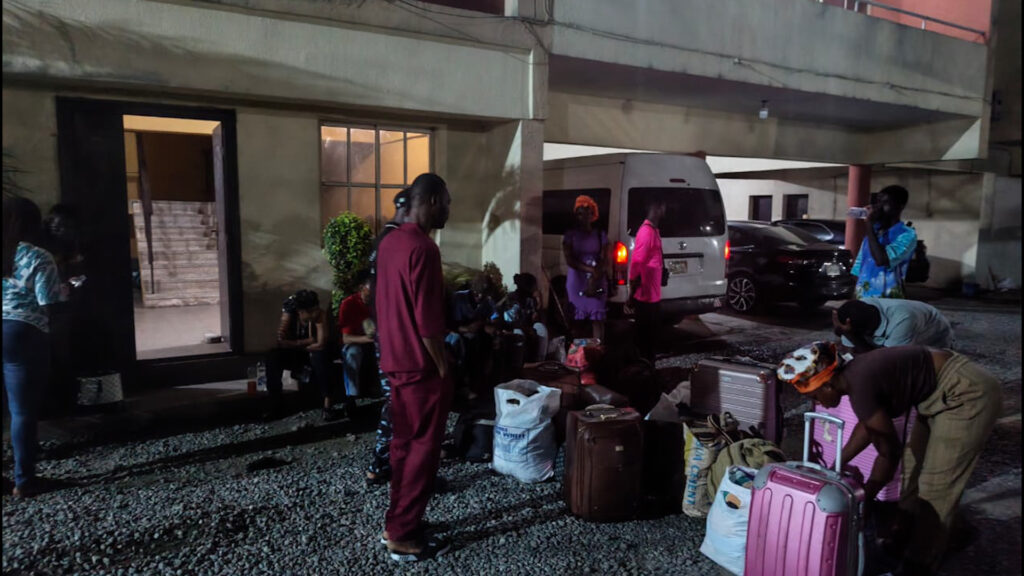
Investigators who visited one of the camps located at Ekpe in Lagos State found hundreds of victims reportedly being held under conditions that survivors describe as captivity and exploitation.
Authorities estimate that approximately 500 trafficked victims are currently being held at the Ekpe camp alone.
However, the scale of the operation appears far larger.
Intelligence gathered by investigators suggests several similar camps are operating across Lagos and other parts of Nigeria, collectively holding more than 5,000 victims, including Ghanaians, Cameroonians and nationals from other West African countries.
In neighbouring Ogun State, investigators estimate that about 3,500 additional victims may be trapped in similar facilities.

The victims are reportedly being forced to participate in cyber-related criminal activities popularly known as internet fraud schemes, with many allegedly lured from their home countries through false promises of employment and better economic opportunities.
One of the rescued victims is reported to be a branch youth organizer of a major political party in Ghana, highlighting the indiscriminate nature of the trafficking network.
The discoveries mirror recent investigations in Côte d’Ivoire, where authorities uncovered comparable camps holding trafficked victims, including members of security services.
However, preliminary investigations suggest the Nigerian operation may involve a broader and more sophisticated criminal network.
Investigators allege that the trafficking syndicate comprises retired police officers, politicians, immigration officials and civilians operating across national borders.

At a second camp visited during the investigation, authorities found no victims on site.
Although the camp had been vacated, personal belongings believed to belong to trafficked victims remained inside the facility, indicating a sudden departure.
Conflicting accounts have emerged regarding the disappearance of the occupants.
Some sources claim the victims fled after learning of an imminent security operation.
Others allege the camp came under attack following accusations of rape involving some occupants, prompting local police to evacuate survivors to an undisclosed location after receiving medical treatment.
The investigation has also raised concerns about the ability of diplomatic and security institutions to respond effectively to trafficking cases.

Sources involved in the investigation claim the Ghana Embassy in Nigeria is aware of the trafficking situation but lacks adequate resources to provide comprehensive assistance to victims.
There are also allegations that some local security officers have ignored complaints from victims who managed to escape and sought protection.
Experts warn that the growing intersection of human trafficking, organized crime and cyber fraud poses a major security threat to the West African sub-region.

They are calling for coordinated action among governments, security agencies and international partners to dismantle trafficking networks and rescue thousands of victims believed to remain trapped in camps across the region.
Investigations are ongoing as authorities work to identify additional victims, trace the financial networks behind the operation and arrest other suspects connected to the trafficking syndicate.
The latest discoveries have once again drawn attention to the growing menace of human trafficking in West Africa and the urgent need for stronger regional cooperation to combat what many now describe as a rapidly expanding form of modern-day slavery.
By Peter Quao Adattor/paqmediagh