
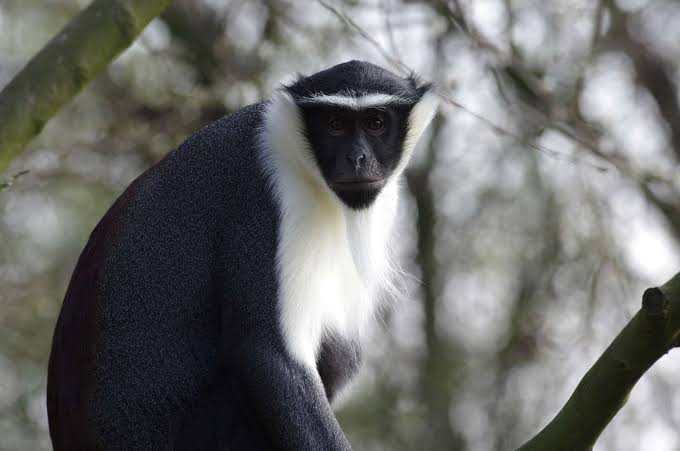
The possible extinction of Miss Waldron’s red colobus monkey, once found in the forests of Ghana, Côte d’Ivoire and other West African Countries, should serve as a warning that West Africa risks losing not only its wildlife but also the natural systems that support food production, clean water, health and livelihoods, a biodiversity expert has warned.
The Pro Vice-Chancellor of the University of Environment and Sustainable Development (UESD), Professor Edward Wiafe Debrah, said the disappearance of the monkey represents the wider consequences of failing to protect nature.
Speaking during a virtual media engagement organised by the West African Journalists for Environment, Science, Health and Agriculture (WAJESHA) on the theme “Understanding Biodiversity: Why Nature Matters to Our Future,” Prof. Debrah said biodiversity loss is no longer only an environmental concern.

He said the decline of nature threatens food security, public health, climate resilience, economic development and the livelihoods of millions of people across West Africa.
“The issue is for us to act now. Protect nature and secure our future,” Prof. Debrah urged.
A warning from a disappearing species
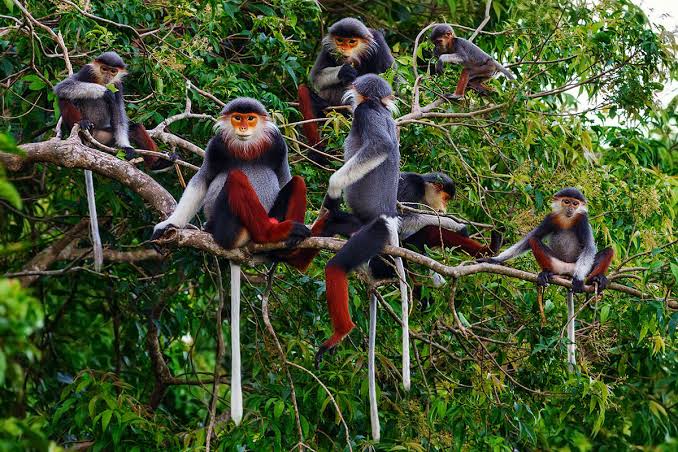
Miss Waldron’s red colobus (Procolobus badius waldroni) was once native to parts of Ghana and Côte d’Ivoire.
However, the monkey has not been conclusively recorded in the wild for decades and is widely considered possibly extinct.
Scientists believe its disappearance was mainly linked to hunting pressure and the destruction of its forest habitat.
The species is among Africa’s most threatened primates, and conservation experts say the decline of red colobus monkeys often reflects deeper problems affecting tropical forests.
Because they depend heavily on healthy forest ecosystems, their disappearance can indicate that forests are losing their ability to support wildlife and maintain ecological balance.
Prof. Debrah said the loss of Miss Waldron’s red colobus should not be seen simply as the disappearance of one animal species.
“It is a reminder of what happens when ecosystems are not adequately protected,” he said.
“Protecting biodiversity is not simply about preserving wildlife. It is about protecting our food, our health, our economy, our climate and the future of generations yet unborn.”
Nature supports everyday life
Professor Debrah described biodiversity as “the web of life that sustains our planet.”
He explained that biodiversity includes all living organisms, the genetic diversity within species and the ecosystems where they exist.
He said forests, wetlands, rivers, oceans and grasslands provide essential services that people depend on every day.
“For farmers, biodiversity means pollinators that support crop production, healthy soils that improve yields and natural systems that help control pests,” he explained.
He noted that nearly 75 per cent of global food crops depend, at least partly, on animal pollination.
“Without bees and other pollinators, food production declines. Protecting biodiversity means protecting our food, our health and our future,” he said.
Beyond agriculture, he said biodiversity supports fisheries, forestry, tourism, pharmaceuticals and traditional medicine.
Forests, wetlands and mangroves also help communities adapt to climate change by reducing flooding, improving water quality and storing carbon.
West Africa’s biodiversity under pressure
Africa remains one of the world’s richest regions in biodiversity, with tropical forests, savannahs, wetlands, mangroves and marine ecosystems supporting millions of people.
In Ghana, Prof. Debrah said biodiversity includes more than 700 bird species, over 200 mammal species, important freshwater and marine ecosystems, medicinal plants and globally recognised forests such as Kakum, Atiwa and Bia.
However, he warned that these natural resources are under increasing pressure.
He identified forest destruction, illegal mining, agricultural expansion, pollution, climate change, invasive species, illegal wildlife trade and unsustainable harvesting as some of the biggest threats facing biodiversity in West Africa.
In Ghana, he said these pressures are visible through forest degradation, polluted rivers, wetland destruction, bushfires, habitat fragmentation, coastal erosion and declining wildlife populations.
“These challenges threaten not only plants and animals but also the communities whose lives depend on these ecosystems,” he said.
Protecting nature requires collective action
Professor Debrah called for stronger investment in protected areas, community-based conservation, wildlife protection, mangrove restoration, tree planting, sustainable agriculture and responsible ecotourism.
He said conservation efforts must involve governments, traditional authorities, local communities, researchers, development partners and the private sector.
He also highlighted the importance of indigenous knowledge and the participation of women and young people in protecting natural resources.
According to him, protecting forests and wildlife requires more than creating protected areas.
“It requires strong enforcement of environmental laws, scientific research, education and creating sustainable livelihoods for communities living close to natural resources,” he said.

Journalists must help society understand biodiversity
Professor Debrah urged journalists to move beyond reporting environmental destruction and help people understand how nature connects with their daily lives.
He encouraged journalists to simplify scientific information, investigate environmental crimes, challenge misinformation with evidence, amplify community voices and highlight solutions.
“Good journalism saves biodiversity. Journalists inform, educate, empower and protect biodiversity,” he said.
He urged journalists to report more on the links between biodiversity, food security, public health, climate resilience, livelihoods and economic development.
“People protect what they understand,” he said.
He encouraged individuals to plant trees, restore degraded landscapes, protect wetlands, reduce plastic pollution, conserve water, support sustainable farming, reject illegal wildlife products and report environmental crimes.
He also called on governments to strengthen environmental legislation, improve protected area management, invest in scientific research and expand environmental education.
WAJESHA strengthening science-based environmental reporting
Commenting on the engagement, Engr. Mahmud Mohammed-Nurudeen, Director of WAJESHA, said journalists have a responsibility to bridge the gap between scientific knowledge and public understanding.
He said environmental reporting must help communities understand how issues such as biodiversity loss affect agriculture, health, climate resilience and economic development.
“Biodiversity is no longer a subject for scientists alone. It is central to agriculture, health, climate resilience, food security and economic development across West Africa. Through WAJESHA, we are creating a platform where journalists engage directly with scientists to strengthen evidence-based reporting that informs policy, empowers communities and supports sustainable development throughout the region,” he said.
Engr. Mohammed-Nurudeen said the webinar forms part of WAJESHA’s continuing professional development programme, which connects journalists with leading scientists and experts to improve reporting on biodiversity, climate change, environment, science, health and agriculture across West Africa.
He said WAJESHA is committed to supporting journalism that moves beyond environmental problems to highlight evidence-based solutions and actions.
About WAJESHA
The West African Journalists for Environment, Science, Health and Agriculture (WAJESHA) is a Non-Profit Journalism Project of the Centre for Climate Change & Food Security (CCCFS) dedicated to strengthening evidence-based journalism on environment, biodiversity, climate change, science, health and agriculture.
Through training, expert engagements and cross-border collaboration, WAJESHA equips journalists with the knowledge and skills needed to produce accurate, solutions-focused reporting that advances public understanding, informs policy and promotes sustainable development across West Africa.
Source: WAJESHA