
By Peter Quao Adattor
A journalist’s legacy is not measured only by material possessions or public awards, but also by the lives touched, relationships built, and integrity maintained over decades of service.
The weekend of November 20–22, 2026, will remain etched in my memory as one of the most remarkable periods of my professional journey in video journalism.
After more than two and a half decades behind the camera, documenting history, telling human-interest stories, exposing wrongdoing and amplifying voices that might otherwise go unheard, I experienced two extraordinary moments that reminded me why I chose this profession in the first place.
They were not moments of financial reward, professional promotion or the presentation of prestigious awards. They were something far more personal: spontaneous expressions of appreciation from two individuals whose paths have crossed mine at different stages of my career.
And they came at a time when I needed such encouragement more than ever.
The Question of Legacy
Over the years, I have encountered people who ask a seemingly legitimate question: after more than 25 years in journalism, what have I achieved? What monumental legacy have I built? What tangible evidence is there to show for the sacrifices, risks, and opportunities that have defined my career?
These are questions I sometimes ask myself.
They have become particularly relevant in recent months as I confront the difficult realities following the devastating June 29, 2026 flood disaster.
Like many professionals who have devoted their lives to public service, I have had to balance personal responsibilities, financial pressures, and the demands of a career that rarely guarantees material comfort.
Yet, through it all, I have tried to remain faithful to one principle: earn what is rightfully yours, but never exploit your professional position to demand what you have not earned.
I do not claim to be a saint. I have my weaknesses, shortcomings, and regrets, just like everyone else.
But I have always feared the possibility of sacrificing my reputation for temporary material gain.
In a society where professional access and influence can sometimes become opportunities for personal enrichment, such a decision may appear naïve.
Some would even argue that refusing to benefit from the opportunities that come your way is like sailing across a river while denying yourself a drink from its waters.
Perhaps they have a point, at least from their perspective.
But I have consistently believed that a good name is better than gold.
And over one extraordinary weekend, that belief was reaffirmed in ways I could never have anticipated.
An Unexpected Tribute from a Boxing Legend
On Wednesday, November 18, 2026, undefeated former world boxing champion Floyd Mayweather Jr. arrived in Ghana for a series of engagements.
Among the highlights of his visit was a public appearance at the Bukom Boxing Arena in Accra on Friday, November 20.
The event generated enormous excitement among boxing enthusiasts, sports personalities and journalists eager to witness the legendary American boxer.
The programme was scheduled for 2:30 p.m.
However, what should have been an exciting afternoon gradually became an exhausting exercise in patience.
For more than five hours, journalists and boxing fans waited for Mayweather and his entourage to arrive.
The delay was frustrating enough, but the treatment of media personnel made matters worse.
Despite our professional responsibilities, journalists were prevented from accessing the inner perimeter of the arena.
One individual, whom I will identify only by the initials T.H., appeared to exercise considerable control over media access, repeatedly directing security personnel to restrict journalists from entering certain areas while refusing to give them the official wristband that provided entry, which became increasingly uncomfortable.
For professionals who had sacrificed their time and resources to cover an event of national and international interest, the experience raised legitimate questions about media coordination, respect and the responsibilities of event organisers.
Eventually, following a personal appeal by some colleagues and me to renowned sports broadcaster Nathaniel Attoh, who was serving as master of ceremonies, the restrictions were eased.
Little did I know that the most memorable moment of my day was still ahead.
As I moved around the inner perimeter with my camera, I encountered Ghana’s legendary boxing champion, Professor Barimah ‘Zoom Zoom’ Azumah Nelson.
He was moving around the arena with another prominent boxing enthusiast, exchanging pleasantries with guests.
As any committed video journalist would do, I instinctively raised my camera and began filming.
Then came a remark I will never forget.
Azumah Nelson looked in my direction and said:
“If I die, if I die, I will wake up, look around the funeral grounds to make sure you are filming me before I return to the ancestors.”
For a brief moment, I was stunned.
Initially, I took the statement as one of those humorous remarks that people make during informal encounters.
But as I reflected on his words and later shared the experience with a few friends, their deeper meaning began to dawn on me.
Here was one of Africa’s greatest boxing icons, a man whose achievements have inspired generations, acknowledging my longstanding presence and contribution to boxing coverage in Ghana.
It was not a formal citation.
There was no plaque, certificate, or envelope.
Yet those few words carried a value that no monetary reward could adequately express.
For years, I have followed Ghanaian boxing, documented the triumphs and disappointments of fighters, covered major events and helped preserve important moments in the sport’s history.
And somehow, without my asking, one of the greatest personalities in that history had recognised the man behind the camera.
How I wished I had recorded those words!
I attempted to secure a brief interview with him, partly hoping he might repeat the remark on camera.
Unfortunately, Mayweather and his entourage had arrived, and Azumah politely declined to speak at that moment.
By the time the programme ended, he had already left.
The opportunity was gone.
But the memory remained.
I had received something more enduring than an interview: an unsolicited acknowledgement of years of professional dedication.
And I thought that was the highlight of my weekend.
I was wrong.
A Friendship Tested, but Not Broken
Earlier that same Friday, before travelling to the Bukom Boxing Arena, I had visited a longtime friend to resolve an uncomfortable situation.
The previous week, I had recommended someone to him for an opportunity.
Unfortunately, the individual’s subsequent conduct had caused considerable disappointment.
I felt personally obliged to intervene because my recommendation had been made in good faith.
My friend did not conceal his frustration.
“This guy nearly destroyed the relationship we have built over the past 20 years,” he told me.
He reminded me of the many people I had introduced to him over the years and the trust that had sustained our relationship.
The experience was a painful reminder that even well-intentioned recommendations can sometimes expose one’s reputation to unnecessary risk.
Thankfully, after a frank conversation, we agreed that the misconduct of one individual should not undermine a friendship built over two decades.
He made it clear, however, that he had no intention of dealing with that person again.
As I prepared to leave, he suddenly called me back.
“Peter, what is your schedule on Sunday?”
I told him I had no planned engagement.
“Then I want you to come to my house. My wife is turning 50, and we are organising something small for her at 2 p.m.”
I gladly accepted the invitation.
At the time, I thought nothing unusual about it.
After all, this was a friend whose family I had known for many years.
I had no idea that the invitation carried a surprise far greater than the birthday celebration itself.
Twenty-One Years of Service Remembered
On Sunday, November 22, I arrived at the venue around 1:30 p.m.
As usual, I came armed with my professional tools: my camera and the instincts of a journalist who finds it difficult to attend an event without documenting something.
This time, however, I was there primarily as a guest.
The occasion was the 50th birthday celebration of Mrs Cynthia Adjoa Annan, wife of James Kofi Annan, founder and president of Challenging Heights.
It was a beautiful gathering of family members, friends, associates and staff, all united in celebrating a woman whose life had touched many people.
The atmosphere was warm and joyful.
There were tributes, laughter, photographs and the familiar excitement that accompanies a milestone birthday.
Eventually, the birthday cake was cut, and the master of ceremonies began coordinating group photographs.
The celebrant posed with her mother, children, family members, friends and various groups of workers.
One group after another was invited forward.
Then, just when it appeared the photo session was coming to an end, the master of ceremonies made an unexpected announcement.
There was one person in the gathering who had not yet been formally introduced.
And the President of Challenging Heights would personally introduce him.
James Kofi Annan took the microphone.
The room fell quiet.
I had absolutely no idea what was about to happen.
He began by reflecting on the difficult journey of building Challenging Heights and the struggle to communicate its vision, mission, and humanitarian work to the public.
Then he made a statement that left me deeply moved.
When the organisation was trying to introduce its ideas, aspirations and work to the wider public, he said there was one journalist who consistently helped bring its story to television.
That journalist, he announced, was Peter Quao Adattor.
He explained that he had deliberately invited me to the celebration.
He introduced me as a journalist formerly with TV3 and now with GHOne TV.
Then came the words that touched me most:
“When you hear the name Peter Quao Adattor on air, this is the man. He has been with us since our beginning, 21 years ago.”
The room erupted in applause.
For a moment, I struggled to process what had happened.
Some guests who had heard my name on television over the years were seeing me in person for the first time.
Others were learning about a professional relationship that had quietly endured for more than two decades.
I was invited to join the celebrant and her family for photographs.
It was a simple gesture, but its significance was profound.
After the formalities, a few people approached me to exchange pleasantries and request my contact details.
I appreciated their interest.
But that was not what made the occasion special.
What moved me most was the realisation that work I had undertaken more than 20 years earlier had neither been forgotten nor taken for granted.
The Stories That Almost Never Made It to Air
As I reflected on the tribute, memories of the early years of Challenging Heights came flooding back.
I remembered the struggle to bring attention to its humanitarian activities, particularly its work involving vulnerable children and communities.
I also remembered the professional obstacles that sometimes stood in the way.
There were occasions when some managers and colleagues questioned the editorial value of such stories or suggested that the organisation should pay commercial fees before its activities could receive television coverage.
I found those experiences troubling.
To me, stories about vulnerable children, human rights, education and social transformation were not merely promotional opportunities for organisations.
They were legitimate public-interest stories deserving serious journalistic attention.
That did not mean abandoning editorial independence or becoming a public relations officer for a humanitarian organisation.
It meant recognising that important stories should be judged on their newsworthiness, public value and potential impact, not simply on whether someone was willing to pay for airtime.
Whenever I believed a story deserved coverage, I tried to find a legitimate editorial pathway to get it told.
Sometimes it was difficult.
Sometimes it required persistence, persuasion, and personal sacrifice.
But I continued.
Over time, those efforts helped establish a relationship of professional trust with Challenging Heights and its leadership.
That trust has endured for 21 years.
Looking back, I realise that such a relationship could easily have been exploited for personal financial or material advantage.
There were opportunities to make demands, seek favours or attach conditions to the professional support I offered.
I chose a different path.
Not because I had no personal needs.
Not because I was financially comfortable.
And certainly not because I lacked ambition.
I simply believed that public-interest journalism should not become a bargaining tool for personal enrichment.
That conviction has not always made life easy.
But on Sunday, November 22, I was reminded that integrity can yield rewards that money cannot purchase.
Two Encounters, One Powerful Lesson
Within 48 hours, two men from entirely different professional backgrounds had independently reminded me that my work mattered.
One was Professor Azumah Nelson, a legendary boxer whose achievements have brought immense pride to Ghana and Africa.
The other was James Kofi Annan, a humanitarian whose organisation has spent years working to protect vulnerable children and transform lives.
Neither had been asked to acknowledge me.
Neither was responding to a request for recognition.
Their words came spontaneously.
And perhaps that is what made them so meaningful.
I have received professional recognition and awards over the years, and I remain grateful for them.
But these encounters offered something different.
They reminded me that beyond the awards, headlines, television appearances and public recognition lies another measure of professional achievement: the trust you build, the people you serve, the stories you help tell and the reputation you leave behind.
There are journalists whose achievements can be measured in properties, investments and financial success.
There is nothing wrong with acquiring wealth honestly.
Indeed, financial security is something every hardworking professional deserves.
But I have come to understand that not every meaningful achievement can be entered into a bank account or displayed on a property register.
Some are preserved in the memories of people whose lives intersected with yours.
Some are reflected in the confidence that individuals and institutions place in your work.
Others emerge unexpectedly, decades later, in a casual remark at a boxing arena or an emotional tribute at a birthday celebration.
A Good Name Is Still Worth Protecting
I write this reflection not to portray myself as morally superior to anyone or to suggest that I have lived a flawless professional life.
Far from it.
I have made mistakes, experienced disappointments, and faced challenges that continue to test my faith and resolve.
The practical realities of life remain.
The consequences of the June 29 flood disaster have not disappeared.
The difficult decisions surrounding relocation and personal responsibilities remain unresolved.
And after more than two and a half decades in journalism, there are still dreams I have yet to fulfil.
But the events of November 20 and 22 have given me renewed perspective.
They have reminded me that a life of service is not necessarily a life without achievement simply because its rewards are not immediately visible.
They have also reinforced my belief that doing what is right, even when it comes at a personal cost, is never entirely wasted.
In the end, our professional legacy may not be determined solely by how much we accumulate, how loudly we announce our accomplishments, or how many powerful people we know.
It may also be measured by what people remember about us when we are not in the room.
By the trust we have earned.
By the opportunities we have created for others.
By the voices we have amplified.
And by the principles we refused to compromise.
I remain grateful to Professor Azumah Nelson for his unforgettable words and to James Kofi Annan for publicly acknowledging a relationship that began 21 years ago.
Their gestures have given me something precious at a difficult moment in my life: renewed confidence that the journey has not been in vain.
I do not know what tomorrow holds.
But I know that my story is not over.
I will continue to work, to learn, to tell stories that matter, and to trust God for the strength to overcome the challenges ahead.
If it is His will, I believe I will overcome, and in His own time, my efforts will count for something greater.
For now, I carry with me the memory of two remarkable encounters and one enduring conviction:
A good name is better than gold.
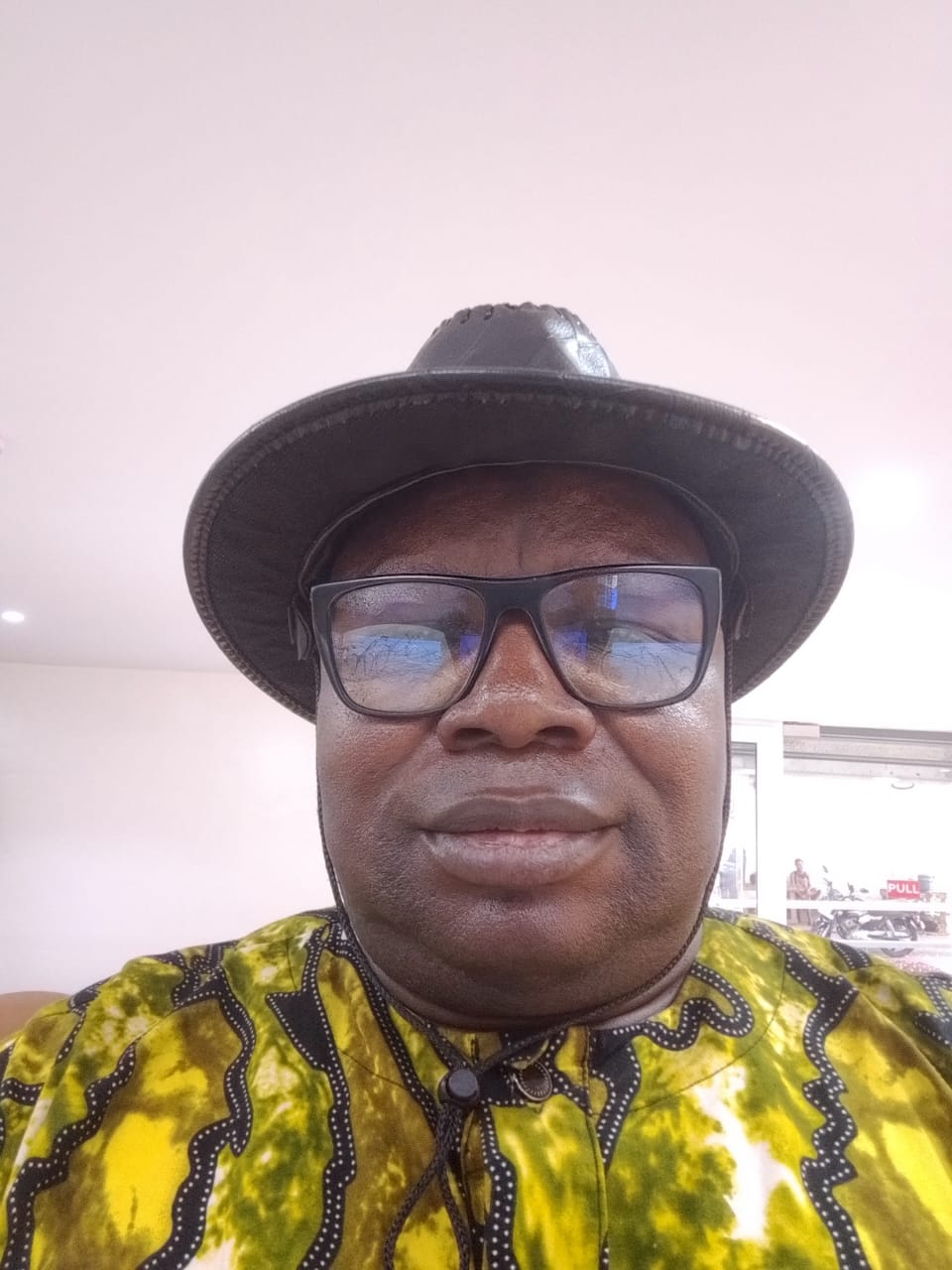
Peter Quao Adattor, Video Journalist, Ghone TV & EIB Network
November 23, 2026