
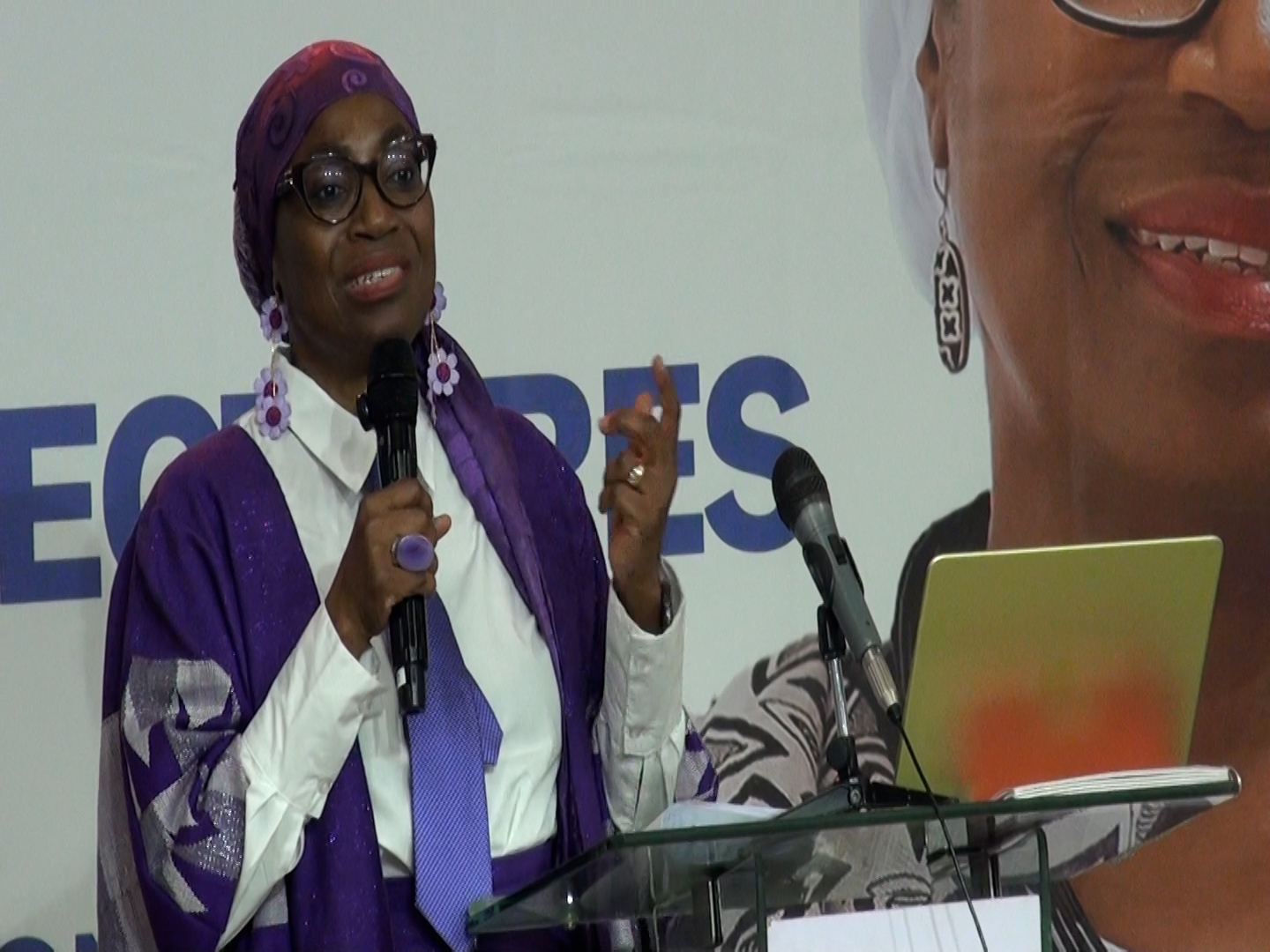
Africa should not approach the green future simply as a race to replace fossil fuels with renewable energy, according to the outgoing Director of the United Nations University Institute for Natural Resources in Africa (UNU-INRA), Professor Fatima Denton.
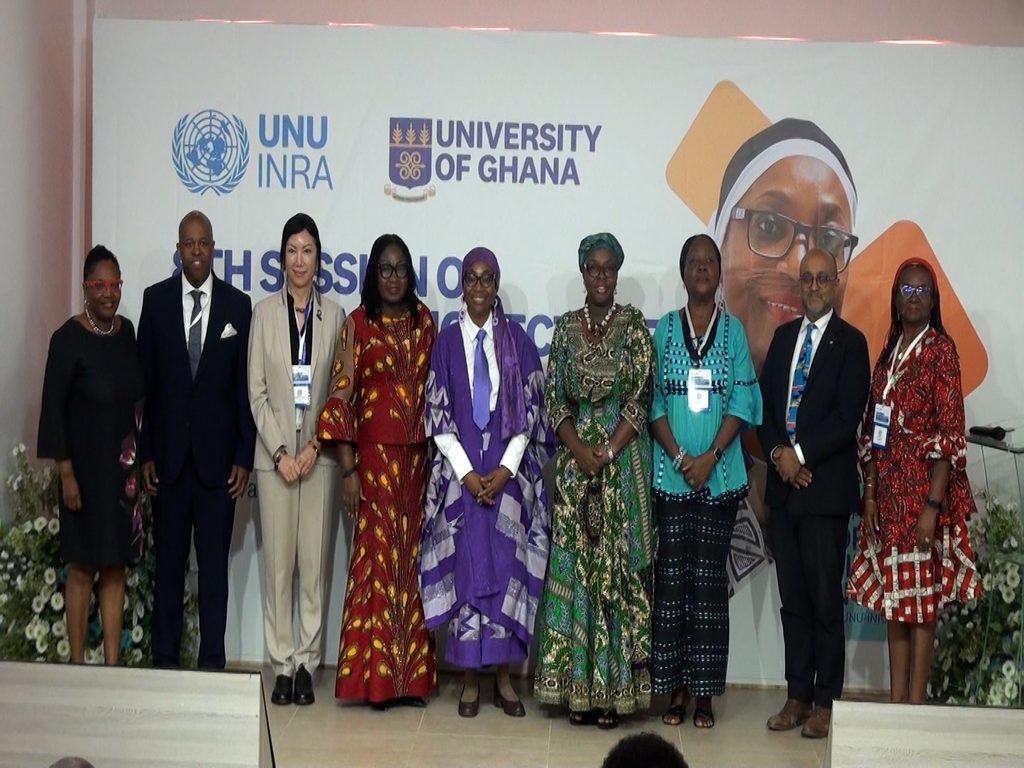
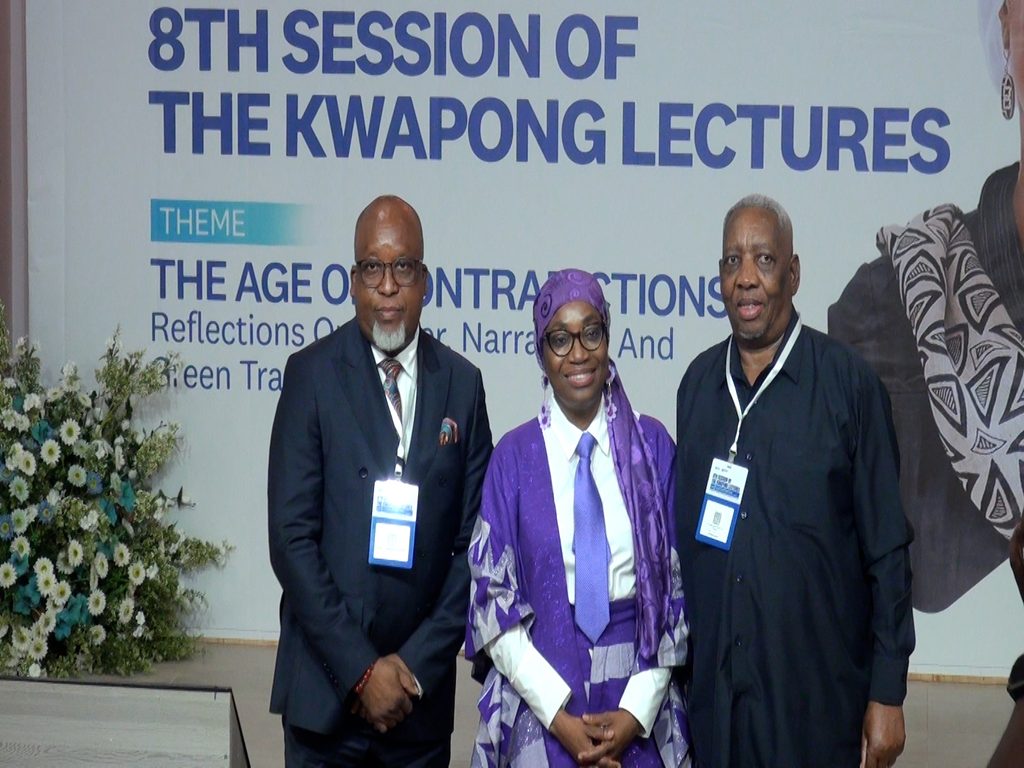
Delivering the keynote address at the 8th Kwarpong Lectures at the University of Ghana, Professor Denton argued that the language of a “green transition” does not fully reflect Africa’s development realities.
She noted that about 600 million Africans still lack access to modern forms of energy, while between 10 and 12 million Africans enter the job market every year.

For a continent still struggling with energy access, industrialisation, infrastructure and employment, she said the challenge is not simply to transition away from carbon, but it is to transform.
Professor Denton used Ethiopia to illustrate the dilemma.
The country has pursued policies to encourage electric vehicles partly as a way of reducing dependence on imported fuel and making use of its significant renewable-energy potential.
But she questioned whether countries that have not yet met many basic development needs can afford to pursue climate mitigation without sufficient financing and infrastructure.
The same tension, she said, applies to Africa’s critical minerals.
Owning the minerals is not enough
Professor Denton pointed to Ghana’s lithium experience as a lesson in the changing economics of natural resources.
The discovery of lithium was widely seen as an opportunity to position Ghana within the global battery economy.
But when lithium prices fell, the economic assumptions surrounding the project changed.
Her broader point was that geology alone does not determine a country’s economic power.
Markets change. Prices change. Geopolitics change.
And when they do, the bargaining power of resource-producing countries can change with them.
She therefore argued that African countries must look beyond extracting minerals and exporting them.
‘The continent needs to ask how it can develop processing, refining, battery production, manufacturing and other parts of the value chain’ she stressed.
The green economy also has an ecological cost
Professor Denton cautioned against treating renewable energy as an entirely clean process.
The technologies required for the energy transition depend heavily on minerals such as cobalt, nickel and copper, which still have to be extracted.
Mining can degrade soils and ecosystems, potentially undermining Africa’s agricultural potential.
She also pointed to the water intensity of hydrogen development and the possibility of communities being displaced by large-scale projects.
‘The question, therefore, is not simply whether a technology is labelled green. It is also about where the resources come from, how they are extracted and who carries the environmental cost’ Professor Denton argues.
Africa must not become the supplier for everyone else’s green future
Professor Fatima Denton’s biggest concern is that Africa could find itself repeating an old pattern under a new name.
The continent she said has the critical minerals, gas and renewable-energy potential the world needs.
But without processing capacity, manufacturing and strong domestic energy systems, Africa could remain primarily a supplier while higher-value economic activity happens elsewhere.
She cited China’s dominance in mineral processing as an example of why control of the value chain matters.
Africa, she argued, must develop the capacity to capture more of that value itself.
This is particularly urgent because Africa receives only a small share of global clean-energy investment despite its enormous renewable-energy potential.

The unanswered questions
Professor Denton says the green transformation must therefore be viewed through the lens of power.
Who sets the rules?
Who controls the resources?
Who benefits?
And who pays for the transition?
Her warning is that Africa should not simply replace oil with critical minerals while leaving the underlying extractive model unchanged.
The continent needs a green transformation that delivers more than emissions reduction.
It must also deliver energy access, jobs, industrialisation, stronger economies and greater African control over the resources that will power the global economy.
As Professor Denton puts it, Africa cannot afford to be told simply to ‘leap’ into the green future.
The critical question is who will pay for the landing?
By Peter Quao Adattor/paqmediagh