
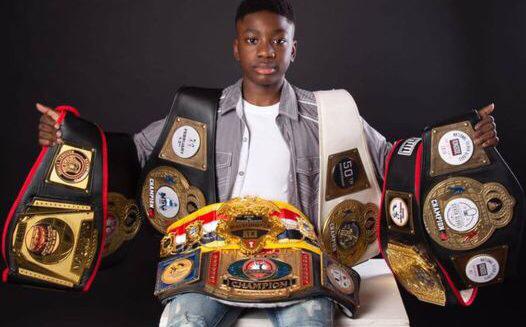
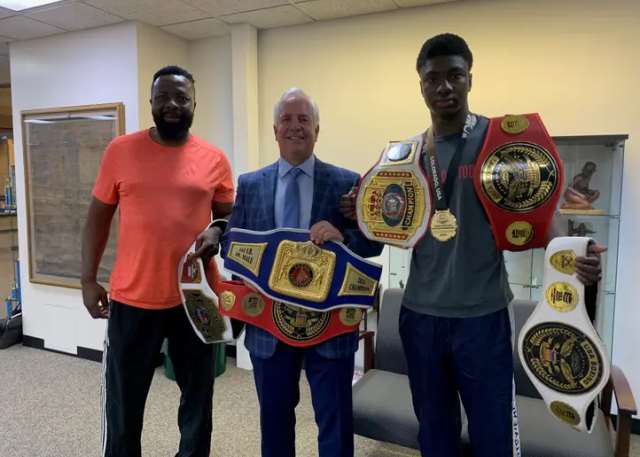
Eighteen-year-old amateur heavyweight phenom Joseph Awinongya Jr. is fast emerging as the next big thing in boxing’s glamor division. With a reported record of 165-10, the 26-time national champion has drawn the attention of top promoters, each hoping to secure a lucrative deal with the American standout.
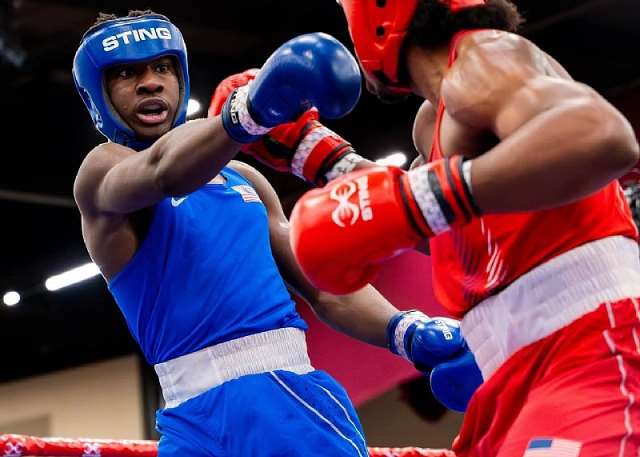
But Awinongya faces a dilemma: continue his amateur career and pursue Olympic gold in Los Angeles, or turn pro to surpass Mike Tyson as the youngest heavyweight champion in history at just 20 years old. Either path could peak in 2028, but time is not on his side.
“I have some tough decisions to make,” Awinongya told The Ring. “I know I have the talent and skills to be the youngest heavyweight champion, as well as a gold medalist for the United States. I just don’t know what the final decision looks like for me right now.”
Awinongya’s latest triumph came in December at the U.S. National Championships in Lubbock, Texas, where he moved up from 176 to 198 pounds to defeat top-ranked Malachi Georges by a 4-1 decision. The performance drew attention from boxing power brokers, including Dana White and Nick Khan, who are cultivating a pipeline for Zuffa Boxing with USA Boxing.
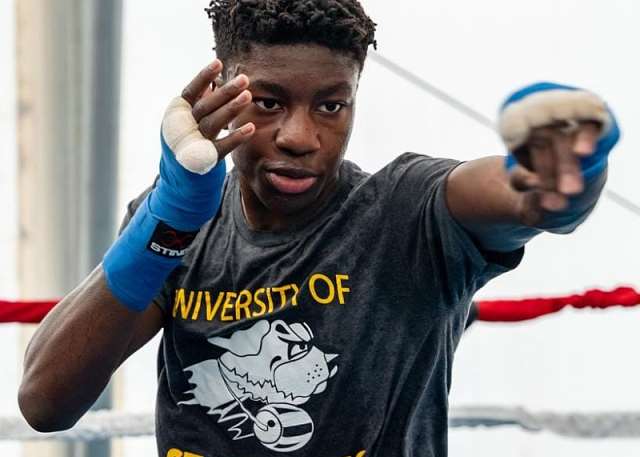
Born and raised in Joliet, Illinois, Awinongya trains at the Sam Colona Boxing Gym under his father, Joseph Awinongya Sr., a former pro with a 12-9-5 record. At 6-foot-5 and still growing, the young phenom began boxing at age five, sparring with current fighters while weighing just 125 pounds.
“People are showing excessive interest, and my father is taking a lot of calls,” Awinongya said. “It proves all the hard work I’ve put in is paying off and fuels me to push even harder.”
The Olympic Dream vs. Pro Stardom
The United States has not produced a male Olympic gold medalist in boxing since Andre Ward in 2004—and in the heavyweight divisions, the drought is even longer. Ray Mercer won heavyweight gold in 1988, and Tyrell Biggs secured super heavyweight gold in 1984. Henry Tillman, another member of the 1984 team, beat Tyson twice in the Olympic Trials, indirectly shaping Tyson’s meteoric pro career.
Since Tyson and Holyfield, the U.S. has struggled to develop heavyweight stars. Deontay Wilder, who earned bronze in 2008, eventually became WBC champion with 10 defenses, but now at 40, he is ready to pass the torch to the next generation.
Awinongya could follow in the footsteps of legends like Sugar Ray Leonard or Oscar De La Hoya, capturing Olympic gold on home soil and becoming an instant sensation. Outside the U.S., heavyweight prospects such as Moses Itauma—a 21-year-old Slovakian-Nigerian ranked No. 7 by The Ring—are rising, setting the stage for future international showdowns.
“I love Itauma’s style,” Awinongya said. “I feel I can achieve even more if fast-tracked. A fight between us would be a super fight, fans can look forward to.”
Roots and Responsibility
Beyond American pride, Awinongya is proud of his Ghanaian heritage, following in the footsteps of Azumah Nelson and Ike Quartey. “It’s amazing to have my people behind me,” he said. “I want to help my family level up and support my community in Joliet and Ghana.”
Awinongya is also academically exceptional: graduating high school at 13, earning an associate’s degree at 15, and a bachelor’s in marketing last year. He is now pursuing a master’s in business while fully focusing on boxing.
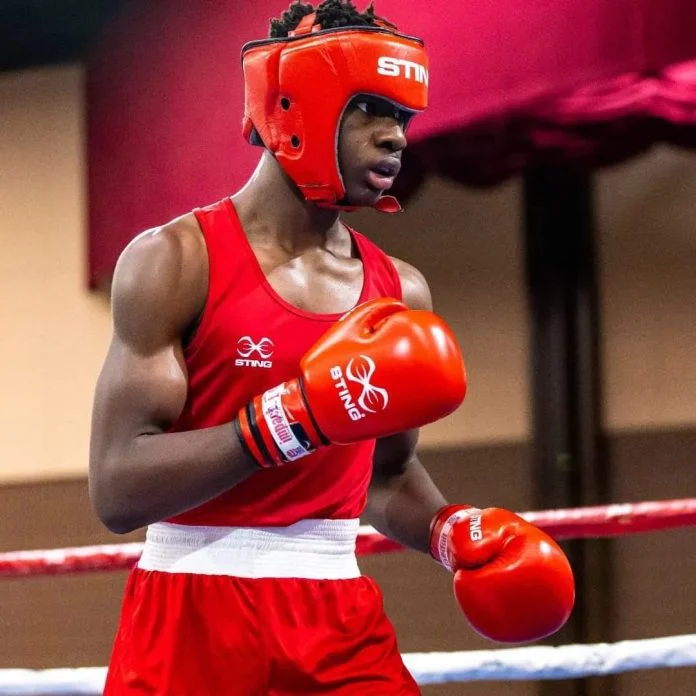
A versatile fighter who admires the greats from Felix Trinidad to Deontay Wilder, Awinongya hopes to meet and spar with his heroes to learn from them directly. “I realize I need to take it slow and speed it up when the timing and opportunity are right,” he said.
For now, Awinongya wrestles with his biggest fight yet—Amateur vs. Pro—while the boxing world waits with bated breath.
“It’s incredibly amazing to be in the position I’m in,” he said, “as I try to take over the heavyweight division, one day.”
By Manouk Akopyan