
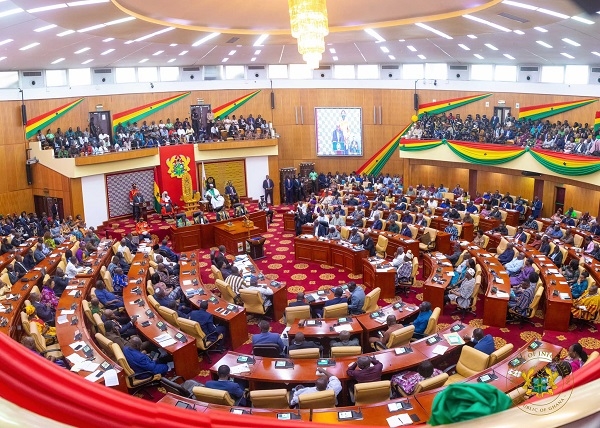
Parliament has approved ¢5.38 billion for the Ministry of Roads and Highways for the 2026 financial year, paving the way for a massive boost in road construction and maintenance works expected to create hundreds of thousands of jobs nationwide. Officials estimate that close to 500,000 direct and indirect jobs will be created from the rollout of major projects under the ministry, including routine maintenance, rehabilitation of trunk roads, bridge construction, and the completion of several ongoing highway projects.
The approval followed hours of debate after the Roads and Highways Committee presented its report, highlighting the urgent need for improved road infrastructure to support transportation, commerce, and national development.
Out of the total allocation, ¢4.45 billion will come from government sources, ¢20.23 million from internally generated funds and GH¢910.80 million from development partners. The funds will be used to support compensation, goods and services, and capital expenditure, the latter taking up GH¢5.18 billion of the approved amount.
According to the ministry, the allocation will be used to scale up work on key corridors, accelerate outstanding projects, and expand labour-intensive programmes such as the Department of Feeder Roads’ maintenance initiatives, which employ large numbers of artisans, technicians, machine operators, engineers, contractors, and unskilled labour.
Sector officials say the infusion of funds will enable contractors who had slowed work due to cash flow challenges to return to full operation, thereby expanding employment opportunities in all regions. They argue that the investment will not only ease mobility but also stimulate local economies, support small businesses, and reduce travel time for commuters and transport operators.
Per the report of the Committee on Roads and Transportation, the Roads and Highways Ministry would also undertake 1,750 km, 500 km, 300 km (under unconstrained conditions) of periodic maintenance activities such as spot improvement and re-gravelling, resealing, asphaltic overlay, partial reconstruction, and maintenance of bridges on trunk, feeder and urban roads respectively.
The ministry will also undertake minor rehabilitation works on 1,678km of trunk roads, 500 km of feeder roads and 30 km of urban roads under unconstrained conditions.
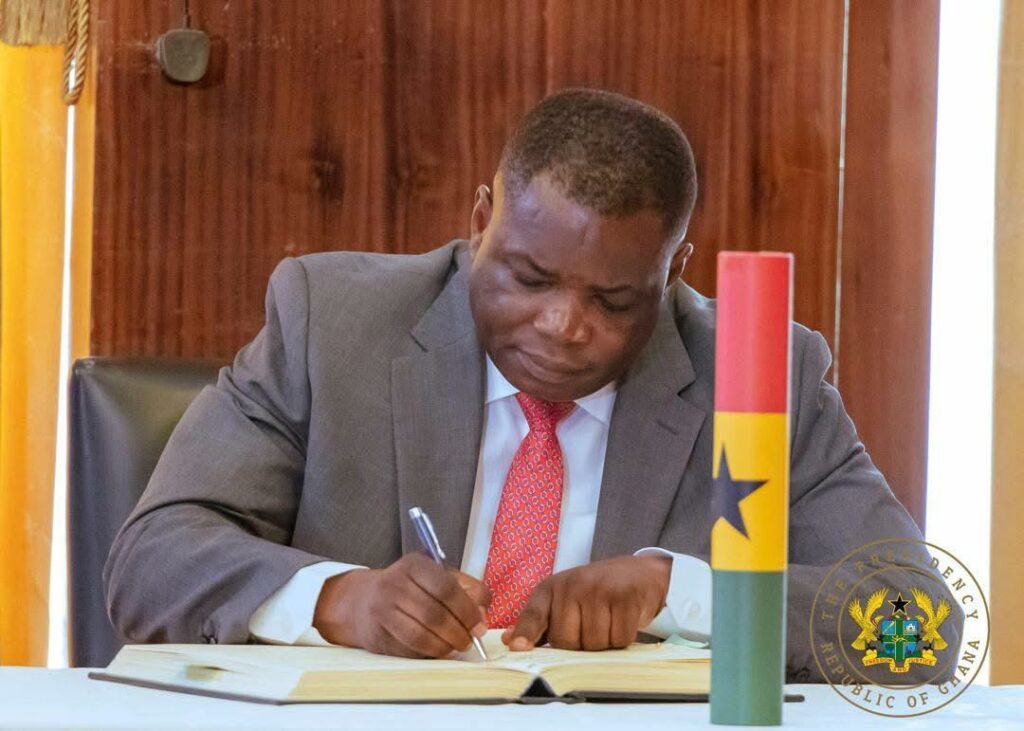
Prior to the approval of the budget allocation, the Minister of Roads and Highways, Governs Kwame Agbodza, said the Big Push would create 480,000 jobs for high-level professionals such as civil engineers, bankers and quantity surveyors.
“Mr Speaker, if we create 500,000 jobs for civil engineers and other professionals for two years, who knows what will happen after the next two years?” he queried.
Touching on abandoned projects which had been approved by the House, the minister said Dome-Kitase, which started under the previous administration, had been put under the Big Push agenda, with the contractor currently on site working.
Similarly, he said progress was being made on the Motorway to Central University, with contractors working on different phases of the project.
With work on Big Push starting more than eight months ago, Mr Agbodza said there were ‘Big Push’ contractors that had executed 30 per cent of their projects already.
With Big Push contractors currently preparing certificates for the volume of work they were doing, he said the allocation of GH¢13 billion for the Big Push might sound huge in monetary terms, but the scale of the projects they were doing required lots of money.
Source: Ekow Annan/newsalertgh.com