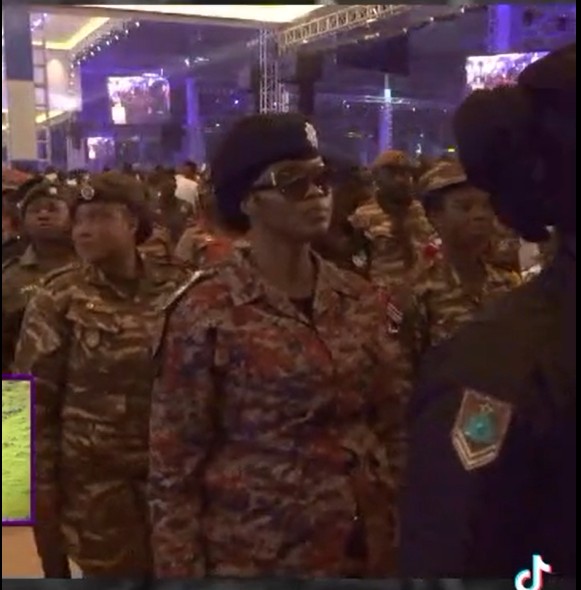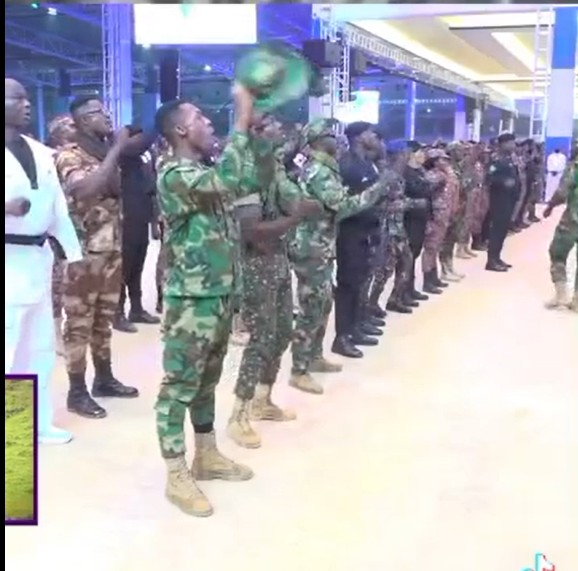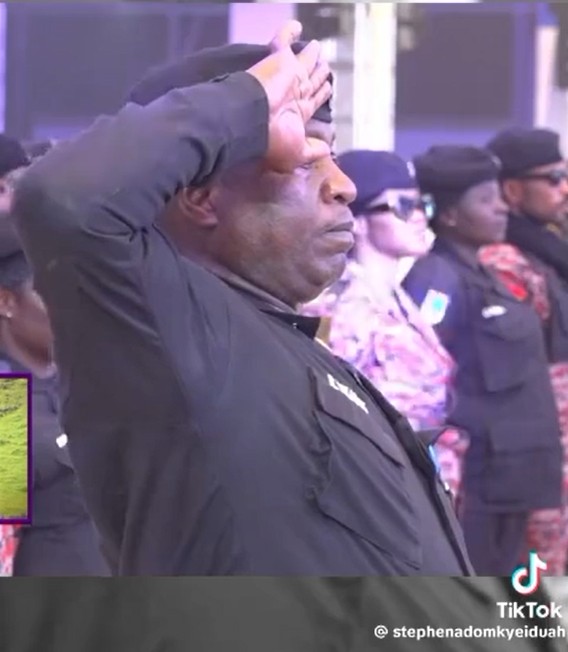

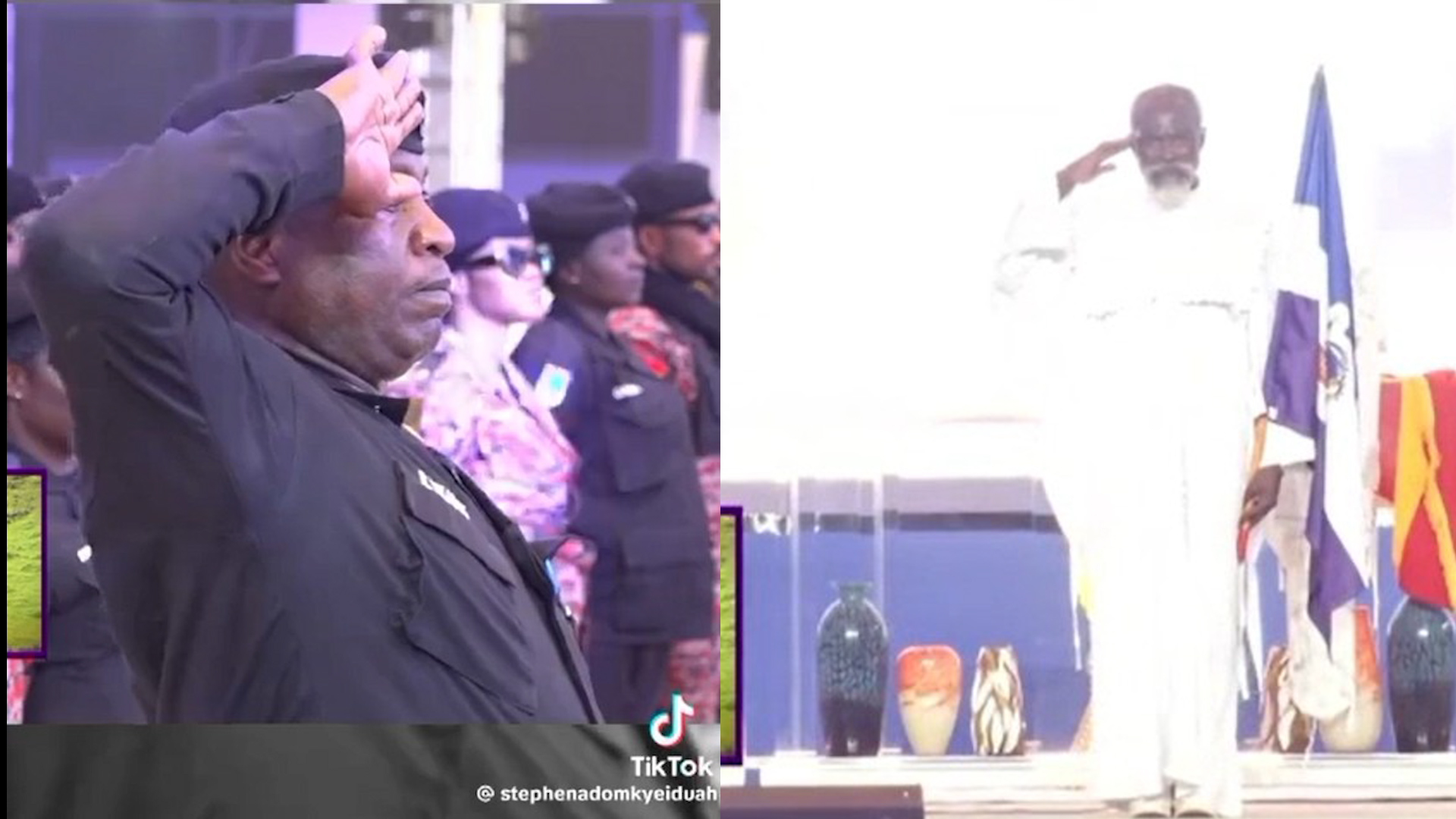
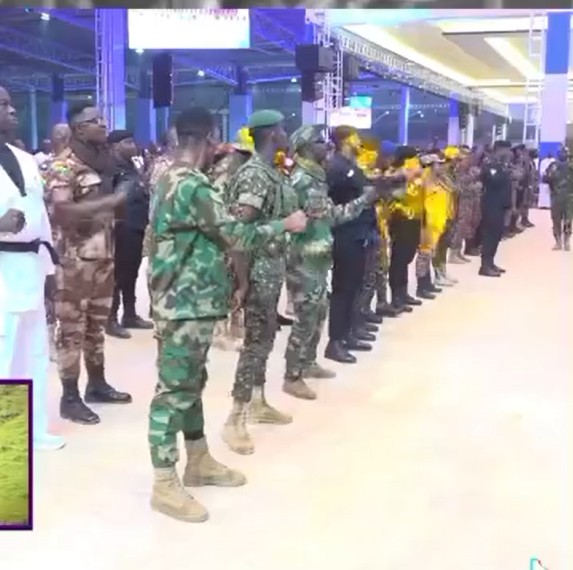
Public concern has been sparked after a video circulating on social media showed men dressed in security-style uniforms saluting and taking instructions from a man identified as Adom Kye Duah, who was standing on a raised altar and being addressed as “His Majesty.”
In the footage, the uniformed men appear to accord ceremonial respect to the spiritual leader and respond to his directives in a manner observers say resembles the conduct of trained personnel from the military or police services.
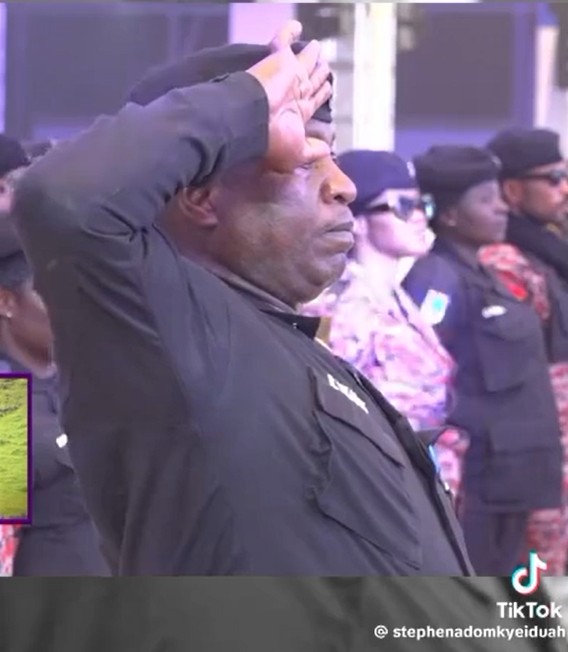
The video has triggered widespread debate, with many Ghanaians questioning whether the individuals in uniform are genuine members of the country’s security services or civilians wearing uniforms without authorisation.
“I couldn’t believe my eyes and ears,” one observer said. “The way they saluted and took orders looked like a chain of command.”
The incident reportedly occurred during the Passover night service on December 31, but some observers say it is a usual practice in the Second Chance gatherings.
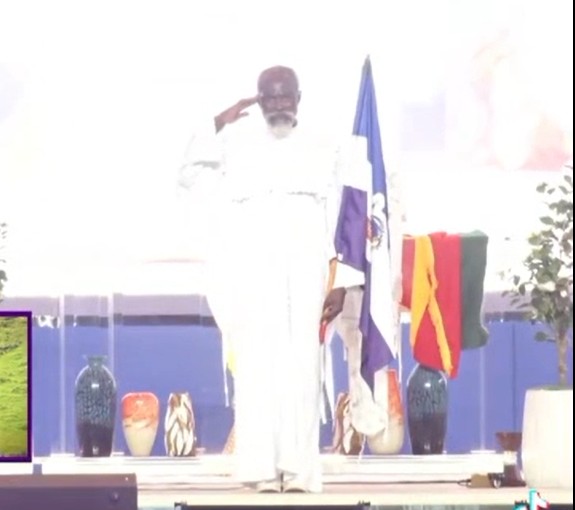
It remains to be seen whether the uniforms worn by the individuals are authentic or ceremonial. No official confirmation has been issued by the Ghana Police Service, the Ghana Armed Forces, or any recognised security agency regarding the identities of the men involved.
Security analysts warn that the unauthorised use of security uniforms or the impression of parallel command structures, real or perceived, poses serious national security and public order concerns, especially at a time of heightened sensitivity around misinformation and impersonation.
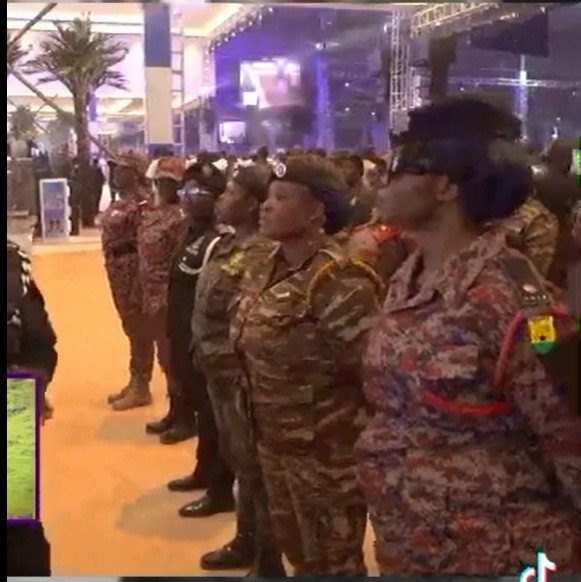
Under Ghanaian law, impersonating a security officer or unlawfully wearing security uniforms is a criminal offence and punishable by law.
Further concerns have emerged following the circulation of the same video, in which popular Kumawood actor Lil Win is seen wearing a full military-style uniform in the open, in the presence of men believed to be trained security officers whose mandate includes enforcing laws related to impersonation and the misuse of state security apparel.
The sight of a civilian personality dressed in a military-like uniform, without any immediate intervention from officers present, has intensified public debate about discipline, oversight, and standards within Ghana’s security services.
Observers allege that this is not an isolated occurrence, noting that the actor has on several occasions been seen in similar military-style attire at public events, raising questions about enforcement consistency and the boundaries between entertainment, symbolism, and unlawful impersonation.
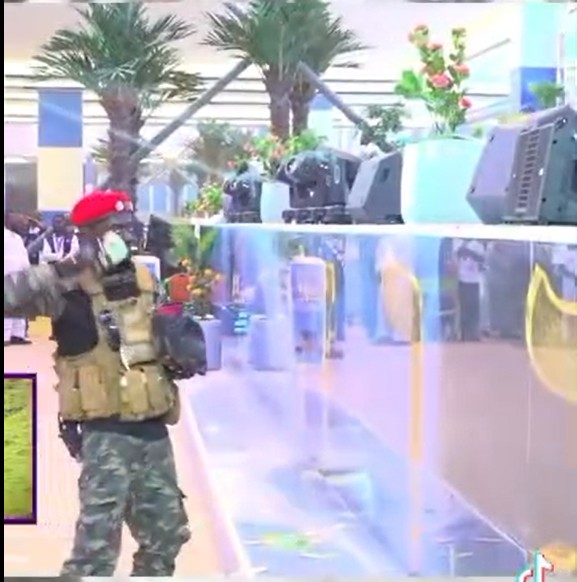
Under Ghanaian law, the unauthorised wearing of military or security service uniforms, or clothing closely resembling them, constitutes an offence, particularly where it may mislead the public or undermine state authority.
The incident has prompted broader reflection on what critics describe as an erosion of the country’s revered social and institutional fabric, especially within the security sector, where professionalism, neutrality, and respect for the chain of command are fundamental.
As of the time of this report, no official statement has been issued by the Ghana Armed Forces or the Ghana Police Service to clarify whether the uniforms seen in the video were authorised, theatrical costumes, or in violation of existing regulations.
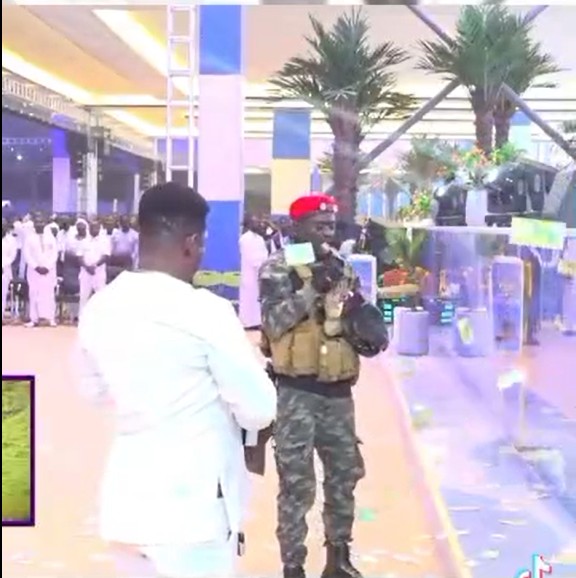
Many Ghanaians are now calling for clear guidance and decisive action from security authorities to protect the integrity of state institutions and reassure the public that the law applies equally to all, regardless of status or popularity.
Members of the public are again calling on state security agencies to urgently investigate the incident, clarify the status of the individuals involved, and take appropriate action if any laws have been breached.
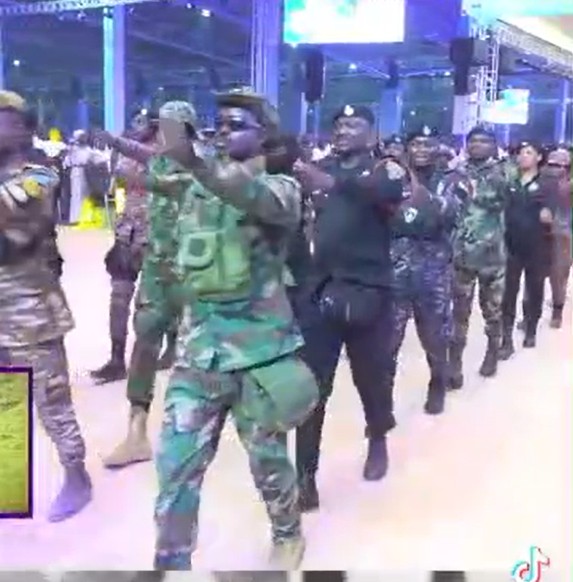
The controversy has emerged at a time when the Minister for the Interior, Mohammed Mubarak Muntaka, has issued a firm warning to security agencies against the unauthorised deployment and use of state security personnel for private or civilian protection duties.
In one of his maiden engagements with the Ghana Police Service Management Board at the Police Headquarters shortly after his appointment, the Interior Minister made it clear that such practices would no longer be tolerated.
He directed all police commanders to immediately withdraw officers engaged in unauthorised civilian protection assignments and return them to their respective commands for proper reassignment in line with operational protocols.
The minister stressed that security personnel are accountable to the state and must operate strictly within the law and established command structures, warning that deviations undermine public trust and the integrity of the security services.
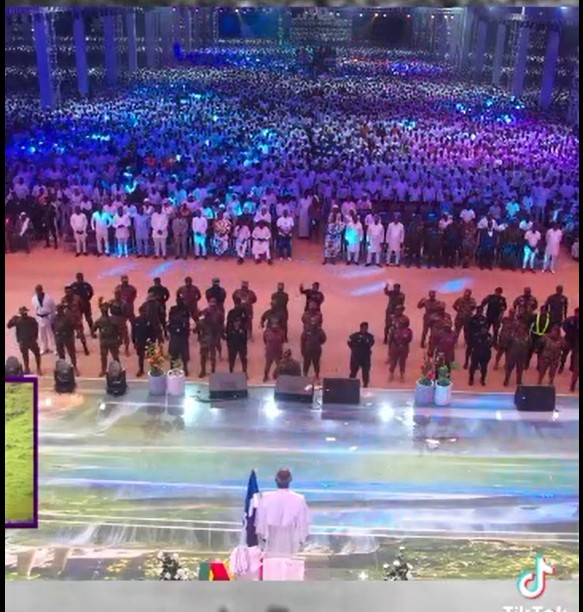
Against this backdrop, the circulation of videos showing uniformed officers allegedly taking instructions from civilians has renewed public scrutiny over the enforcement of the minister’s directive and the broader issue of discipline within the security services.
Until official verification is provided, experts are, however, urging the public to avoid speculation and refrain from drawing conclusions that could inflame tensions or spread misinformation.
By paqmediagh/Peter Quao Adattor