

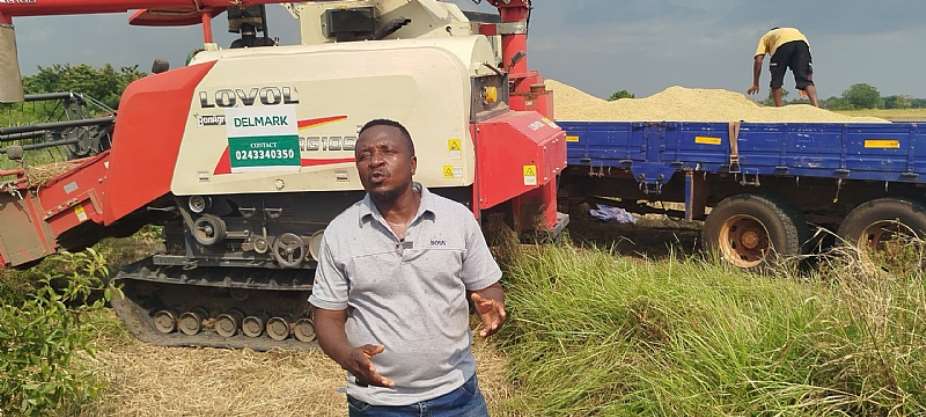
Rice farmers in Akatsi South are facing severe post-harvest losses driven by poor market access, depressed farm-gate prices, and mounting debt—raising urgent concerns about the sustainability of local rice production and the need for climate-smart support systems.
Across farming communities such as Atsiekpi, hundreds of bags of harvested rice remain unsold on farms and in makeshift storage facilities. With no structured market or guaranteed buyers, farmers say they are forced to sell at loss-making prices dictated by middlemen, even as they struggle to repay debts to agrochemical suppliers, fertilizer dealers, and combine harvester operators.
“I still have over 100 bags of rice from the last season sitting in storage, and there’s no one to buy them,” lamented Nicholas, a farmer and transporter. “Even Christmas, which used to be our peak sales period, passed without demand. Cheaper imported rice has flooded the market, and we’re stuck.”
Another farmer from Atsiekpi, Yevugah Victor, said he is battling to repay loans taken to finance harvesting and farm inputs.
“We are losing everything after months of hard work,” he said. “The debts keep piling up.”
The crisis is rippling through the local value chain. Bless, a rice buyer in the area, said traders are also absorbing losses.
“Even when prices are reduced, people are not buying because imported rice dominates the market. The losses affect farmers and buyers alike,” she explained.
Edem Akuaku, a farmer and agronomist who supplies fertilizers and provides harvesting services on credit, warned that the situation is eroding farmer morale and threatening future production.
“The lack of structured market access and support mechanisms is killing motivation,” he said. “We urgently need climate-smart solutions and deliberate policy action.”
Farmers say the crisis is compounded by climate change, with erratic rainfall patterns and extreme weather already disrupting planting and harvesting cycles. The added burden of post-harvest losses linked to market failures, they argue, is making rice farming increasingly unsustainable.
They are appealing to the government and the Member of Parliament for Akatsi South, Bernard Ahiafor, to intervene by improving market access, offering targeted financial relief, and integrating local rice producers into national food security programmes such as the Ghana Buffer Stock Company and broader climate-smart agriculture initiatives.
“The rice is there, we just need a system that works,” Edem stressed.
Agriculture experts note that investing in modern storage infrastructure, regulating pricing mechanisms, and linking farmers to institutional buyers such as schools, hospitals, and correctional facilities could significantly reduce post-harvest losses while strengthening local food systems under climate-smart frameworks.