
By Peter Quao Adattor
Every year, when torrential rains leave parts of Accra submerged, the spotlight often falls on choked drains and poor urban planning. Yet hidden behind walls of concrete and illegal developments is one of the city’s most important natural flood defenses—the Sakumo Ramsar Site.
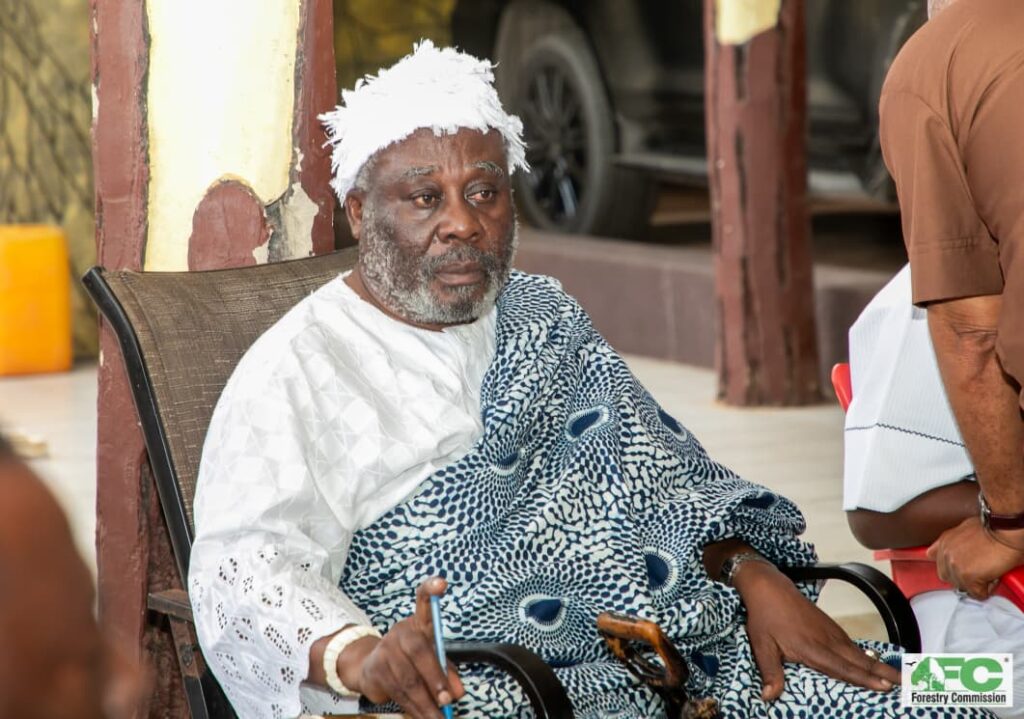
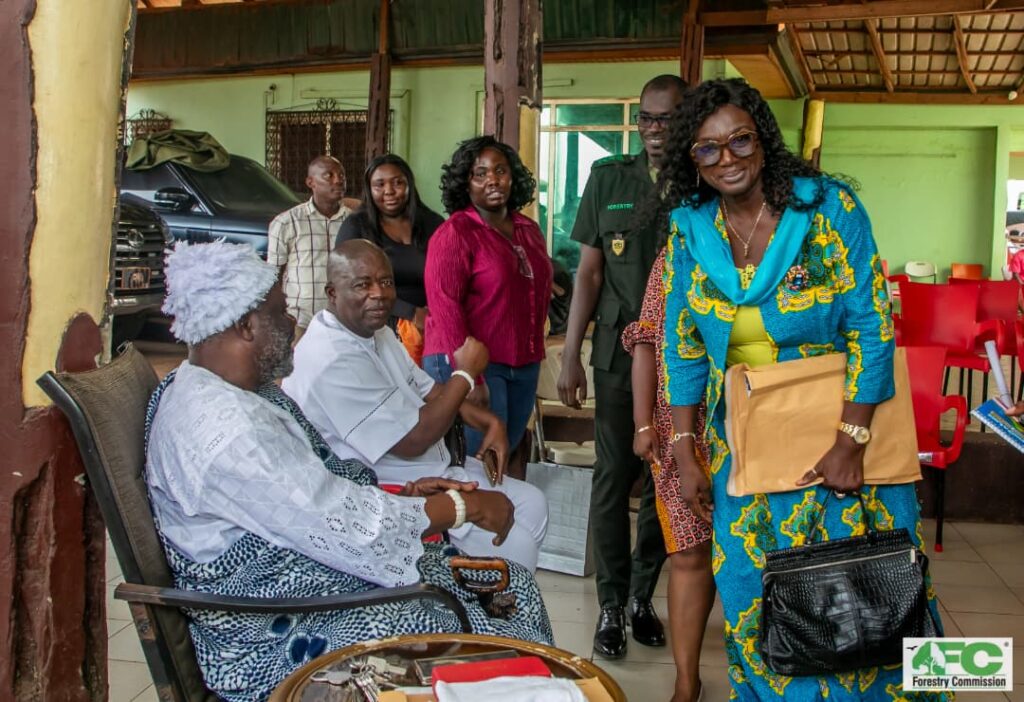
Now, as the internationally protected wetland comes under increasing pressure from encroachment, the Paramount Chief of Nungua, Oboade Notse King Professor Odaifio Welentsi III, has publicly broken his silence.
His message is unequivocal.
“I have never authorised the sale of any land within the Sakumo Ramsar Site.”
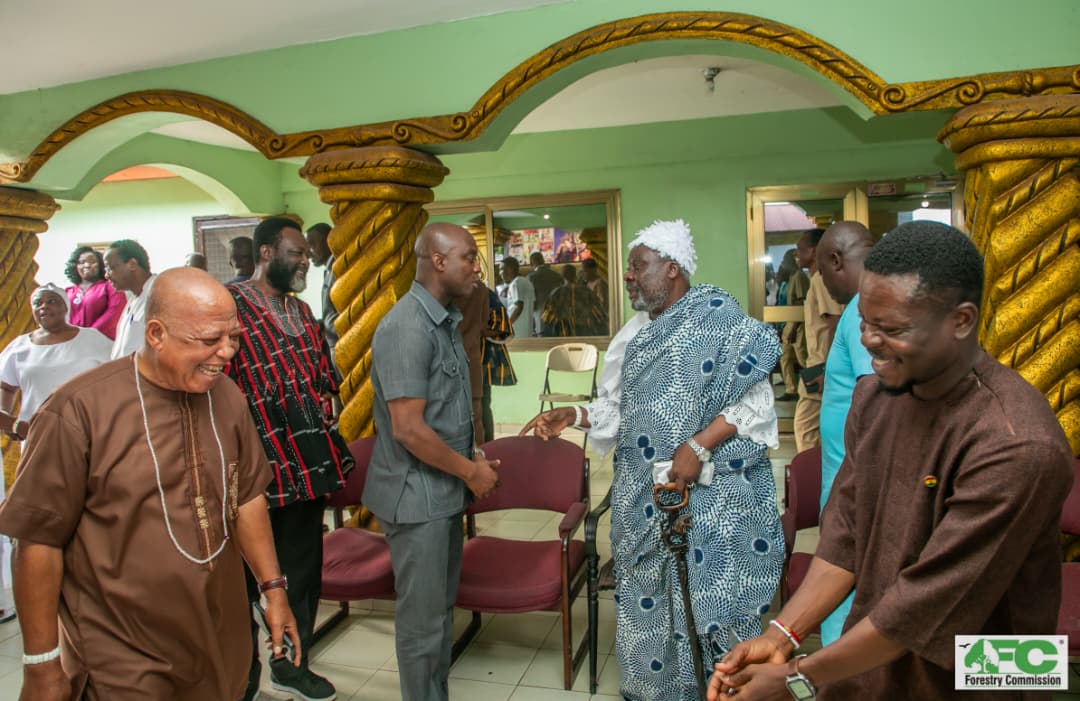
Addressing a consultative meeting with officials of the Forestry Commission at the Nungua Mantse Palace, the traditional ruler firmly dismissed allegations that he had approved land sales within the protected wetland.
He insisted that any land documents bearing what appears to be his signature are fraudulent and warned the public to be wary of individuals claiming to sell plots inside the Ramsar Site.
“I have neither signed nor approved any transaction involving land within the Sakumo Ramsar Site,” he stressed, adding that anyone purchasing land in the reserve does so at their own risk.
More Than a Land Dispute
For the Nungua Mantse, this is not simply a disagreement over ownership. It is about safeguarding an ecosystem that quietly protects millions of people.
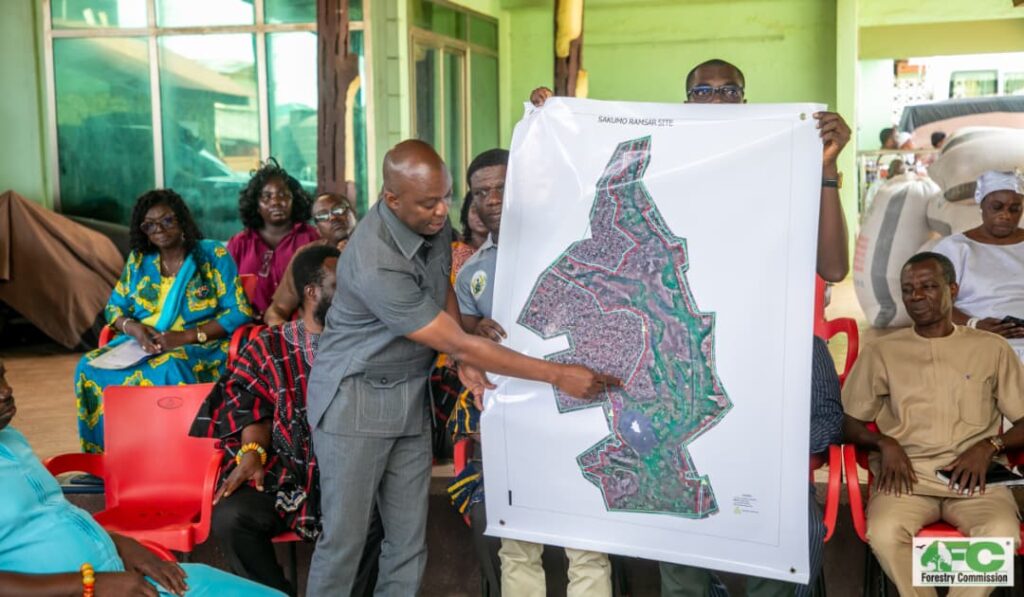
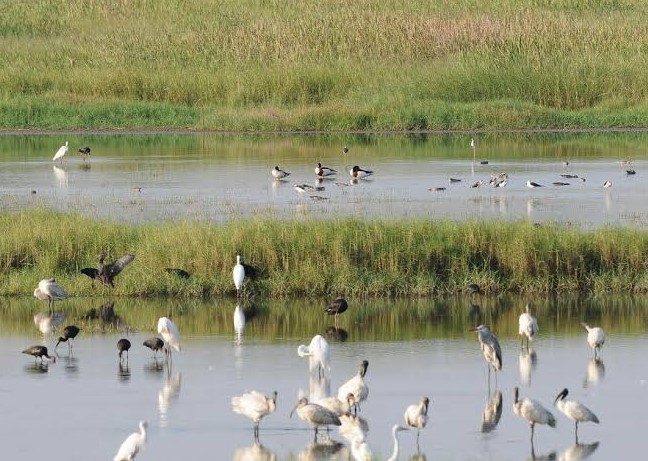
The Sakumo Ramsar Site serves as one of Greater Accra’s most important natural flood retention areas. During heavy rains, the wetland absorbs enormous volumes of stormwater, reducing flooding in surrounding communities. It is also home to migratory birds travelling thousands of kilometres across continents and supports diverse plant and animal life.
Environmental experts warn that every illegal structure erected within the wetland reduces its ability to perform these critical ecological functions.
As climate change intensifies rainfall events, the loss of wetlands such as Sakumo could expose more communities to devastating floods.
A Crime Against Nature
The Paramount Chief described illegal encroachment on the Ramsar Site as a crime against both nature and future generations.
“I am committed to the conservation of the Ramsar Site because protecting this wetland is essential for the well-being of present and future generations,” he said.
He pledged the full support of the Nungua Traditional Council in protecting the reserve, urging residents to see the wetland as a shared heritage rather than land for commercial development.
“Nungua is our only homeland. We have nowhere else to go. That is why we must all support efforts to protect the natural environment that sustains us,” he said.
Forestry Commission Seeks Stronger Partnership
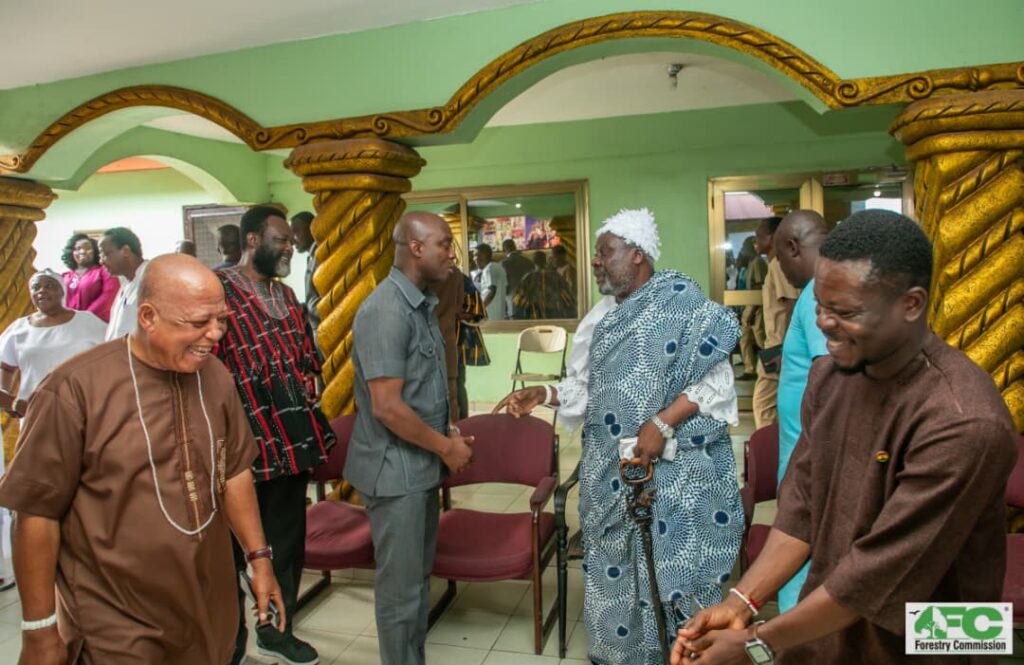
The meeting formed part of ongoing efforts by the Forestry Commission to strengthen collaboration with traditional authorities in protecting the Sakumo Ramsar Site.
Chief Executive of the Forestry Commission, Dr. Hugh Brown, said safeguarding wetlands cannot be achieved through law enforcement alone.
He stressed that traditional leaders, as custodians of the land, play a critical role in preventing illegal encroachment and educating their communities.
Dr. Brown also cautioned prospective land buyers against purchasing land within the protected area, warning that such transactions are unlawful and could result in financial loss.
A Wetland of Global Importance
Ghana became a signatory to the Ramsar Convention on Wetlands in 1988, with the Sakumo Ramsar Site placed under the protection of the Forestry Commission’s Wildlife Division in 1999.
The wetland is internationally recognised for its ecological importance, serving as a refuge for migratory birds, a natural water retention system, and a critical buffer against coastal flooding.
However, increasing pressure from estate developers and private individuals continues to threaten both its core and buffer zones.
As excavators replace birdsong and concrete edges closer to the marshes, conservationists warn that the cost of losing Sakumo will not only be measured in biodiversity, but in flooded homes, damaged livelihoods and a city left more vulnerable to climate change.
For the Nungua Mantse, the choice is clear.
Protect the wetland today, or pay a far greater price tomorrow.
By Peter Quao Adattor/paqmediagh