

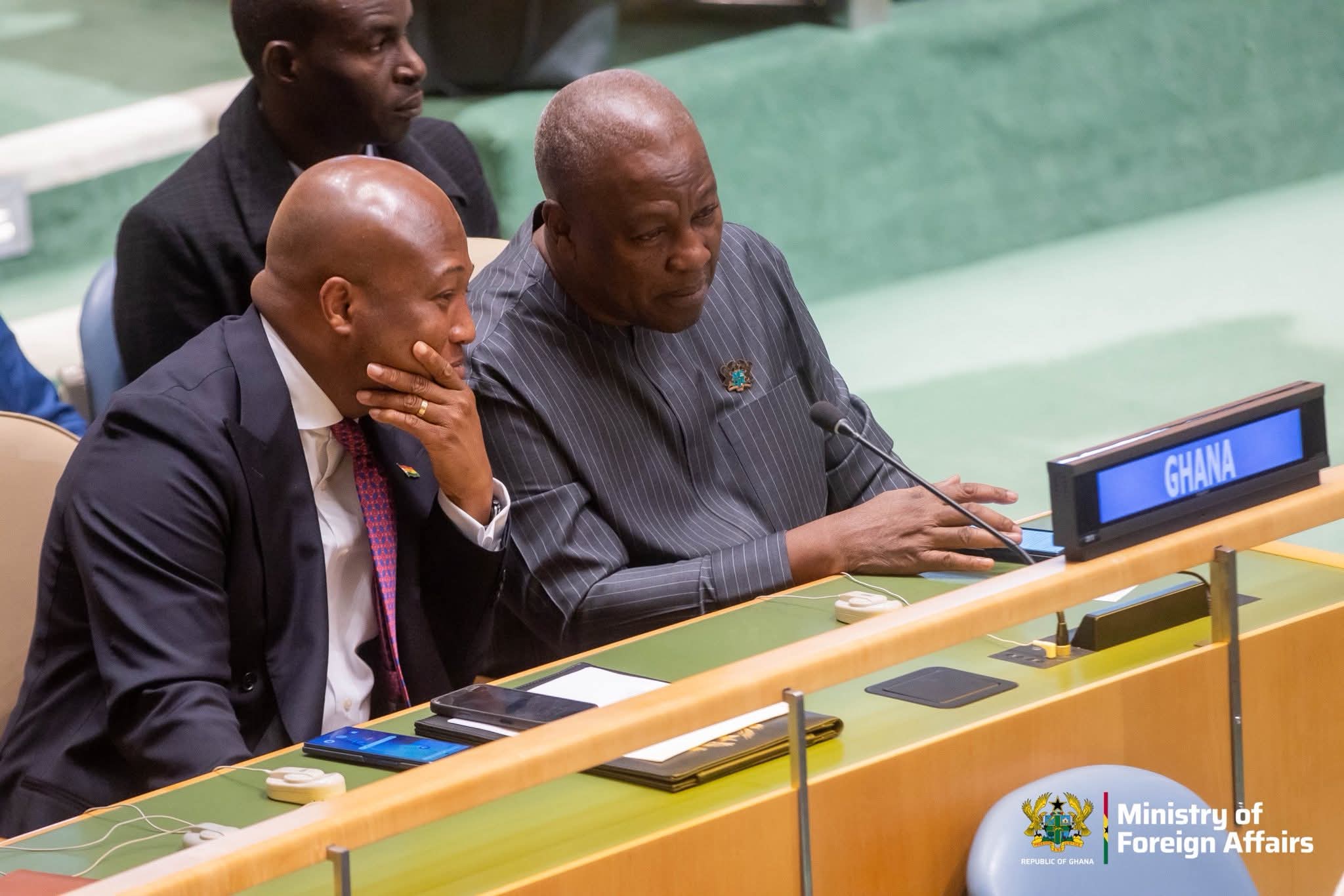
President John Dramani Mahama has praised Foreign Affairs Minister Samuel Okudzeto Ablakwa for what he describes as “stellar leadership” in guiding Ghana to secure a landmark resolution at the United Nations General Assembly, despite intense last-minute pressure to delay the vote.
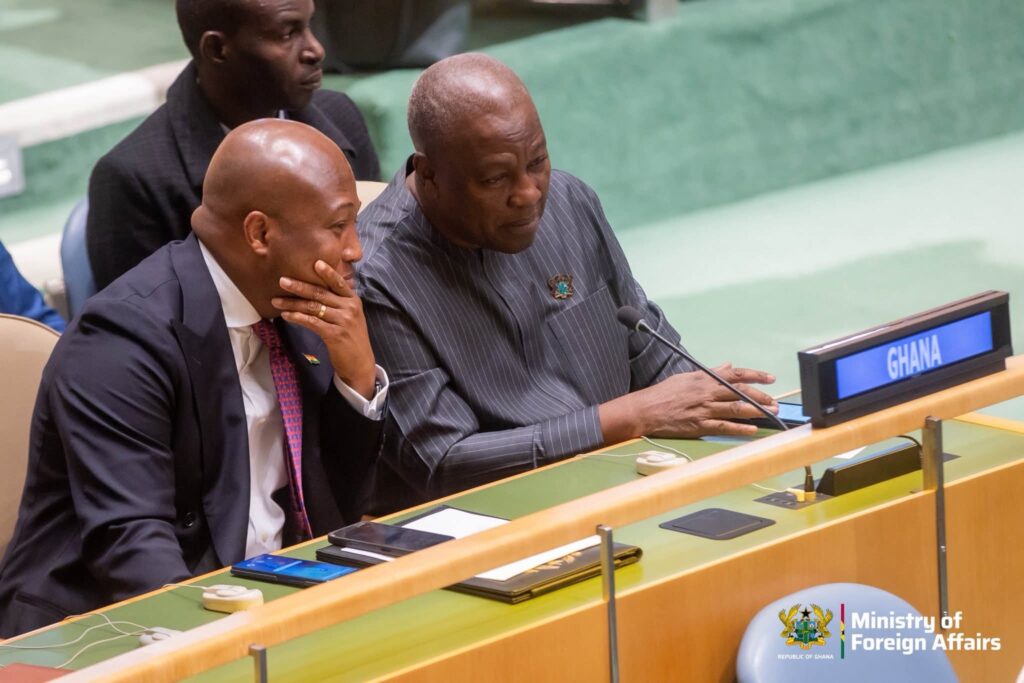
According to President Mahama, the process was fraught with uncertainty, as several countries—including some within Ghana’s coalition—called for postponement, warning that the resolution risked failing without broader consensus.
“When I gave notice of this motion, I knew it would be difficult. We needed to build a broad coalition to get it through,” he said.
The President disclosed that even on the eve of the vote, concerns remained about whether Ghana had the numbers. However, Ablakwa insisted the moment could not be missed.
“If we had postponed, we may not have had such an opportunity again. We had built the strongest coalition possible, and we had to move forward,” Mahama quoted the Minister as saying.
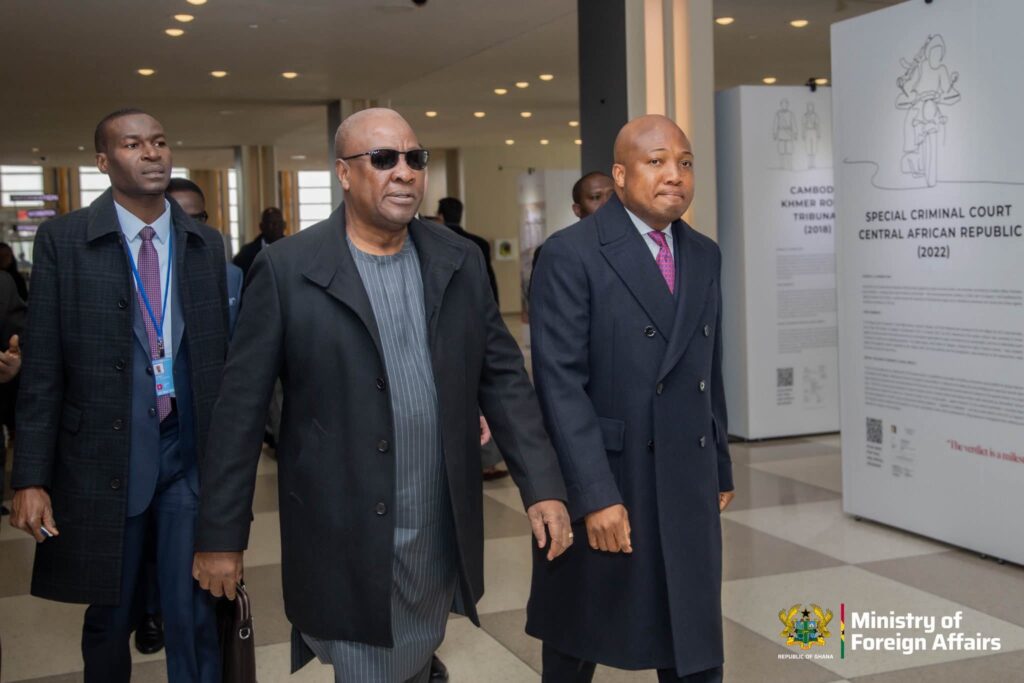
Ghana proceeded with the vote, securing what has been described as an emphatic victory at the UN’s main deliberative body.
The resolution formally recognises the transatlantic slave trade and its historical legacy as a grave crime against humanity. It marks a significant step in Ghana’s broader push for reparatory justice and historical accountability.
President Mahama described the outcome as both symbolic and strategic, linking it to the legacy of Pan-African leaders such as Kwame Nkrumah, Marcus Garvey, and W. E. B. Du Bois.
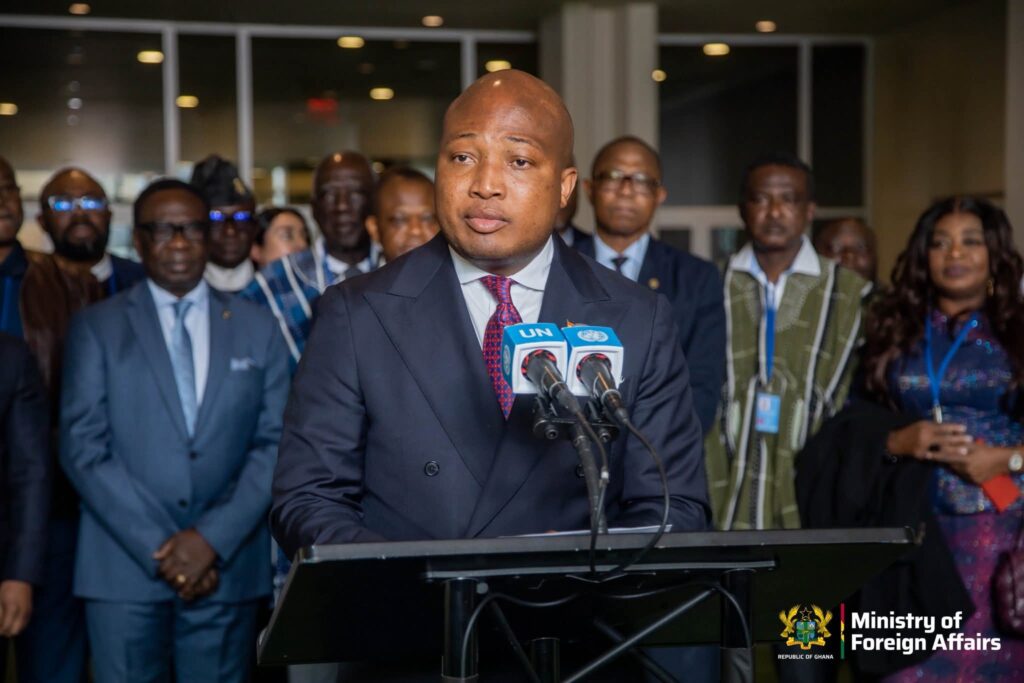
“This victory belongs to all of us—but most importantly to those who were meant to be forgotten,” he said.
The resolution was backed by 123 countries.
However, the United States, Israel, and Argentina voted against it, while 52 European countries, including the United Kingdom, abstained.
In a media interview, Ablakwa said countries that opposed or abstained had “missed a golden opportunity” to acknowledge and apologise for historical injustices. He, however, noted that engagement remains open, particularly with the United States.
Ghana’s success followed months of technical consultations involving legal experts, historians, and policymakers to refine the resolution and build consensus while preserving its core intent.
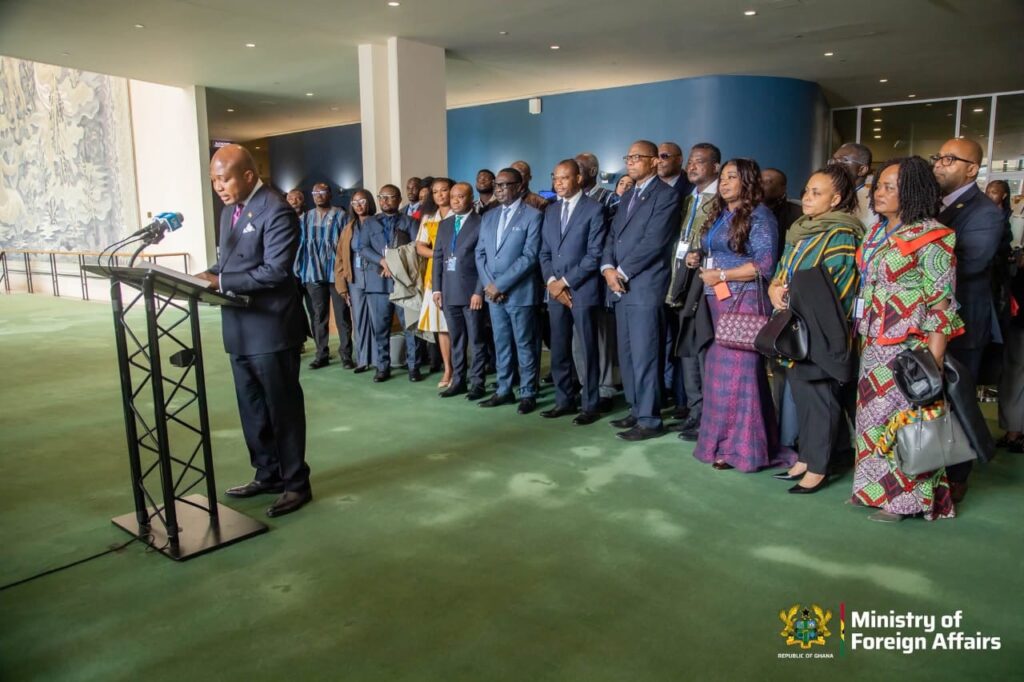
The development is expected to strengthen Ghana’s leadership in global conversations on reparations, particularly across Africa, the Caribbean, and Latin America.
For Ghana, the vote represents more than diplomacy; it reinforces its role as a leading voice for historical justice on the global stage, as the international community increasingly confronts the enduring impact of the transatlantic slave trade.
By paqmediagh/Peter Quao Adattor