

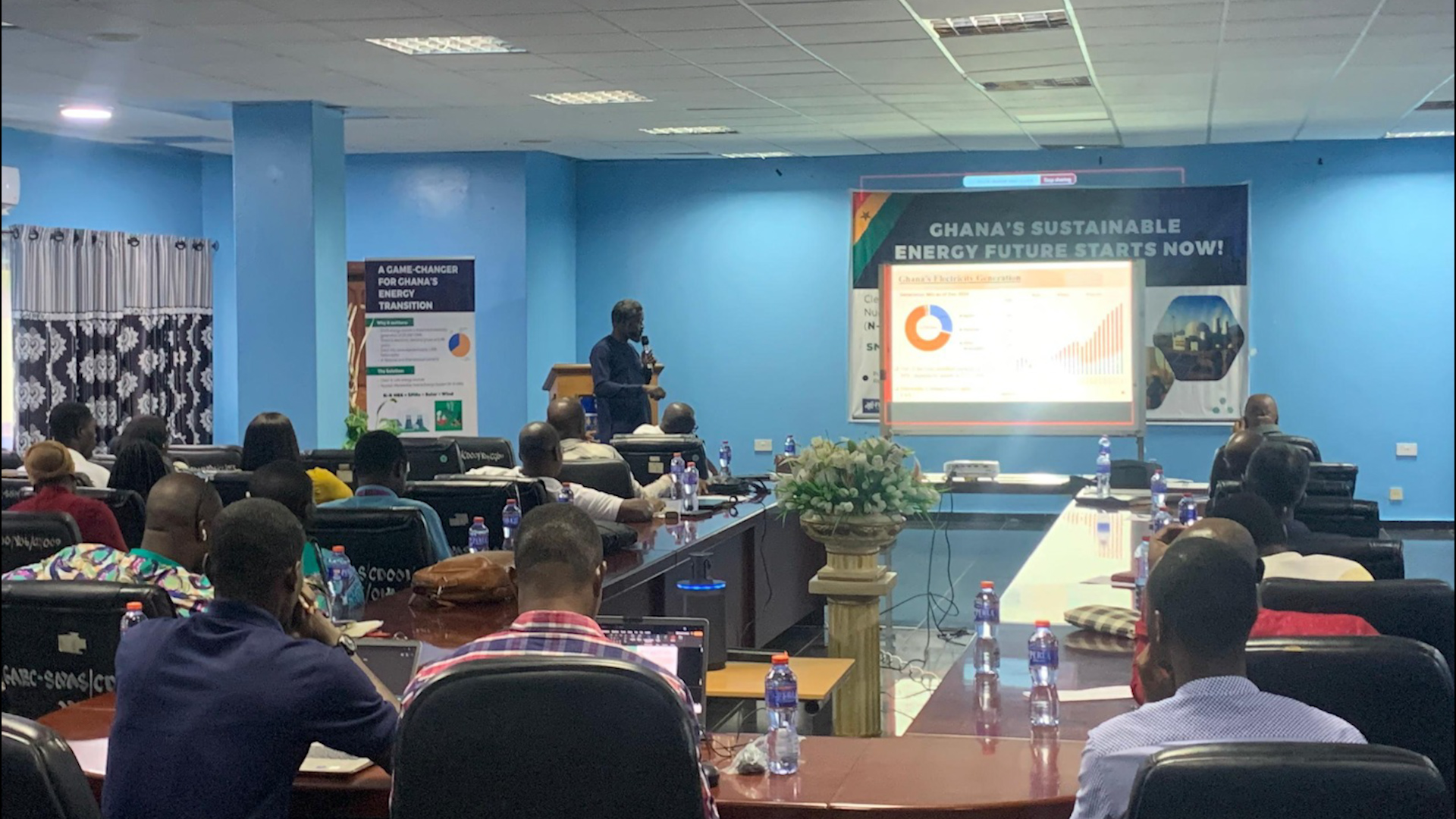
In a decisive step toward clean, reliable, and secure electricity, Ghana is advancing plans to integrate nuclear power with renewable energy.
At a high-level workshop in Accra, national and international stakeholders converged to shape a future where innovation, safety, and sustainability drive the country’s energy mix.
At the Graduate School of Nuclear and Allied Sciences in Accra, policymakers, energy utilities, regulators, and academics gathered to chart Ghana’s next phase of electricity generation.
The workshop brought together leadership from the Ministry of Energy and Green Transition, Nuclear Power Ghana, the Volta River Authority, the Bui Power Authority, the Energy Commission, and key academic institutions—united around one objective: building a resilient, low-carbon power system.
Central to the discussions was the integration of Small Modular Reactors, or SMRs, with solar and wind power.
The concept is simple but transformative—using nuclear energy as a stable, low-carbon backbone to support intermittent renewable sources and strengthen grid reliability.
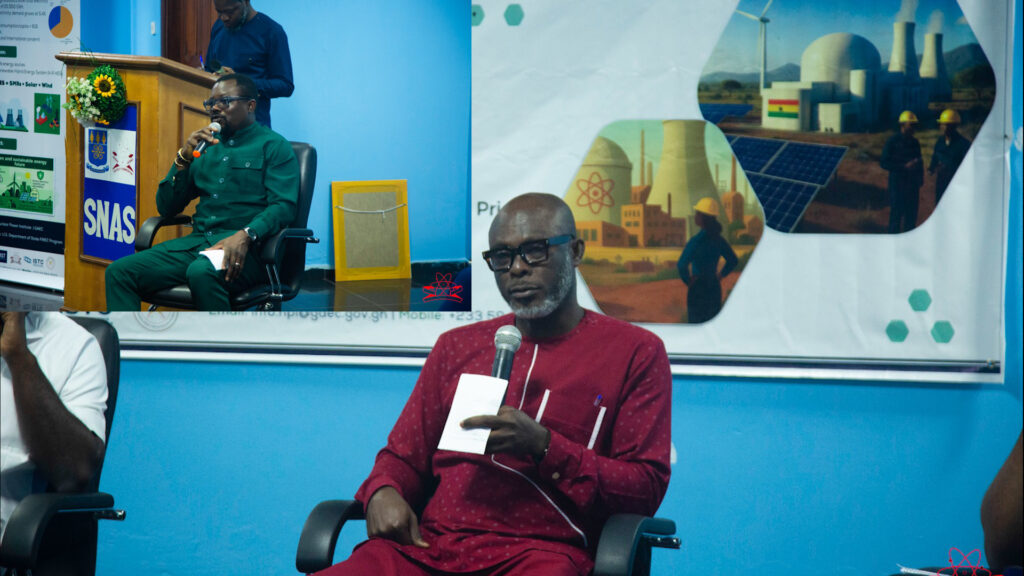
Delivering opening remarks on behalf of the Director-General of the Ghana Atomic Energy Commission, Dr. Eric Glover described the engagement as a strategic milestone for national energy security—emphasising nuclear power as a dependable partner in a diversified electricity mix.
The workshop was supported by the United States Department of State’s FIRST Programme and implemented through the International Science and Technology Centre.
From the international side, ISTC highlighted ongoing capacity-building efforts, including the delivery of a NuScale Small Modular Reactor simulator to Ghana in January 2025—an important step toward developing local technical expertise.
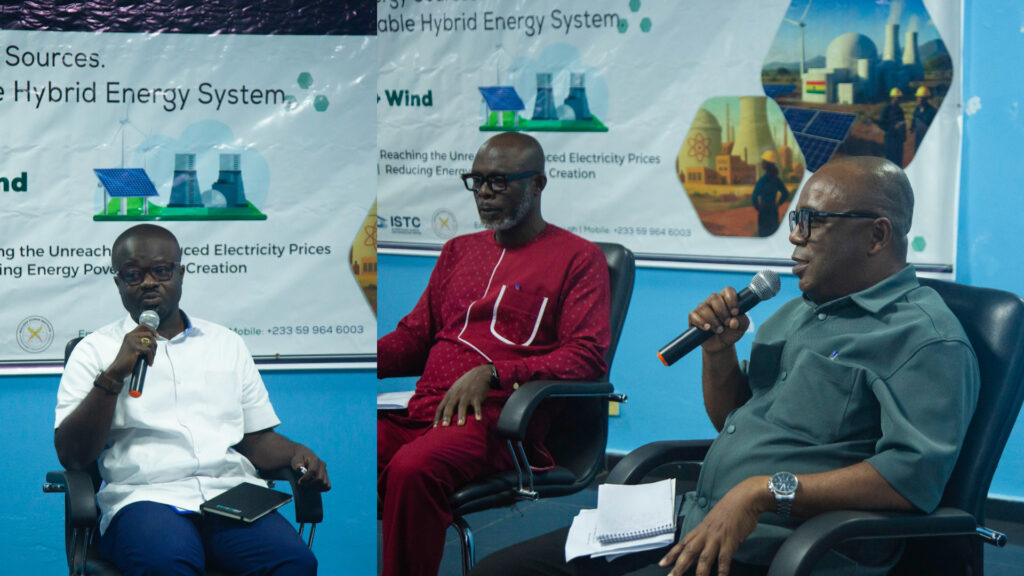
At the heart of the dialogue was research led by energy economist and planner Mark Amoah Nyasapoh, whose study used advanced energy modelling tools to demonstrate how SMR-renewable hybrid systems can enhance grid stability, reduce emissions, and support long-term electricity affordability.
The research, funded by a FIRST microgrant, provides data-driven evidence to inform policy and investment decisions—bridging academic excellence with national development priorities.
Experts from academia and regulatory bodies underscored the importance of safety, independence, and preparedness, highlighting global best practices such as defence-in-depth engineering and rigorous site selection.
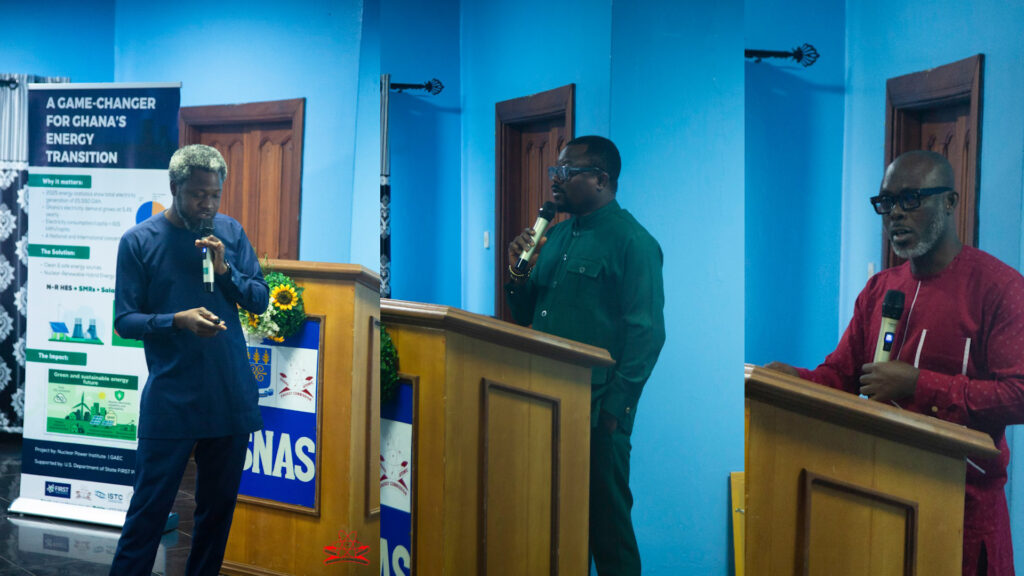
From a policy standpoint, the Ministry of Energy and Green Transition reaffirmed Ghana’s commitment to achieving net-zero emissions by 2070, identifying nuclear power as a strategic complement—not a competitor—to renewable energy.
Energy utilities, including the Bui Power Authority, also signalled readiness to support future integration, while Nuclear Power Ghana emphasised the need for innovative financing models and sustained public engagement.
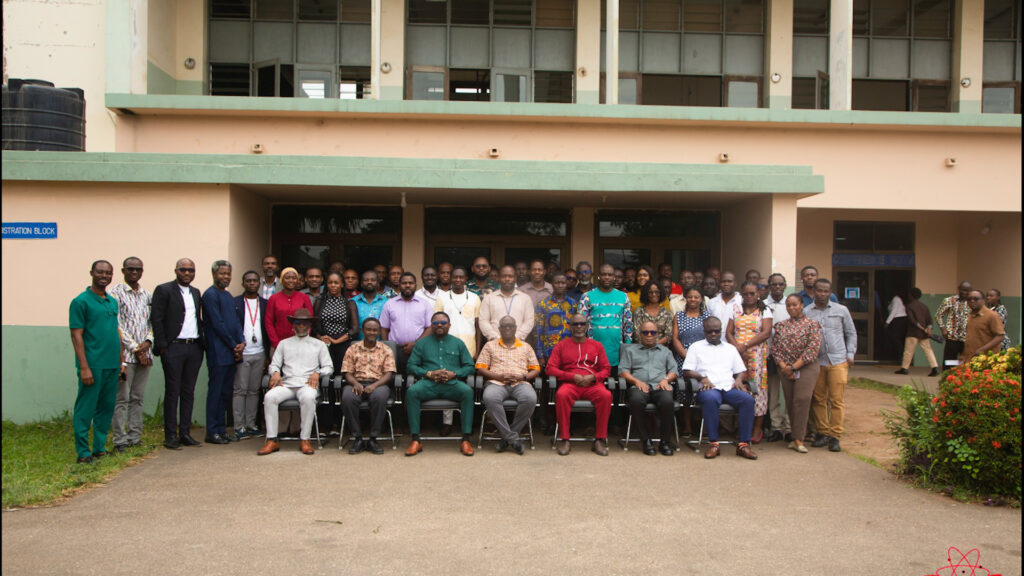
The workshop concluded with a visit to the newly installed SMR simulator—now housed at SNAS’s Energy Exploration Centre—a tangible symbol of Ghana’s growing nuclear capability.
With consensus on next steps—training, industrial certification, financing, and policy integration—Ghana is positioning itself to build a clean, reliable energy system that could serve as a model for West Africa.
By Calvin Dodzi Powell