

Ghana possesses an economic advantage that many countries would spend fortunes attempting to manufacture: an internationally recognised cultural identity, remarkable historical assets and a growing tourism market.
What remains is the opportunity to organise these strengths into a larger, more competitive industry capable of attracting investment, creating employment and generating sustainable national wealth.
The numbers provide a compelling starting point. According to the Ghana Tourism Authority’s 2025 performance figures, international arrivals reached approximately 1.31 million. Visits to tourist attractions increased by seven per cent to 1.79 million, while licensed tourism enterprises expanded by 6.1 per cent to 7,109
Travel trade businesses recorded 18.6 per cent growth, with food, beverage and entertainment enterprises expanding by 8.2 per cent. Estimated international tourism receipts stood at US$4.34 billion.
These figures establish a substantial market with opportunities across hospitality, transport, entertainment, cultural production and supporting services. The visitor experience indicators are equally encouraging.
Reported satisfaction reached 99 per cent for Ghanaian friendliness and 98 per cent for airport facilities and formalities. More than 60 per cent of international visitors were repeat travellers. Business travel accounted for approximately 31 per cent of international arrivals, while the entertainment and conference segment expanded by 14.3 per cent.
Taken together, these indicators suggest an industry capable of supporting a broader range of commercially viable investments. They also explain why Ghana’s tourism development agenda deserves attention from financial institutions, development partners and private investors.
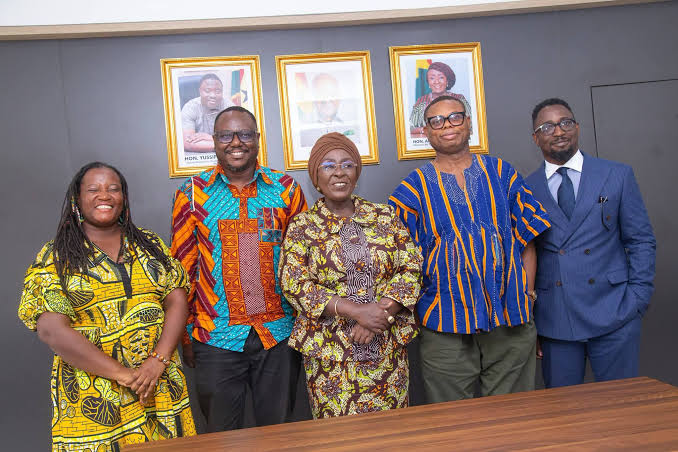
During IMANI Africa’s Centre for Policy and Education working visit to the Ministry of Tourism, Culture and Creative Arts, our delegation, comprising IMANI President Franklin Cudjoe, Vice President Selorm Branttie, and associates Princess Umul Hatiyya Ibrahim Mahama and Kay Codjoe, examined opportunities for strengthening the sector’s economic contribution.
Our engagement revealed a policy direction centred on connecting tourism, cultural heritage, creative industries, infrastructure and private enterprise. This integrated approach creates opportunities that extend beyond conventional destination promotion.
Tourism generates demand across multiple industries. Hotels purchase food, furniture and professional services. Conferences require transport, accommodation, catering and technical support. Cultural attractions create markets for guides, manufacturers, designers and entertainment businesses.
The economic potential becomes considerably greater when these activities are connected through deliberate investment and commercially sustainable partnerships. Cultural production presents another opportunity.
Ghana’s textiles, traditional craftsmanship, historical narratives and creative industries possess commercial value that can support manufacturing, exports and intellectual property development.
The Ministry’s attention to cultural merchandise, trademarks and creative ownership provides a basis for strengthening these markets. Appropriate legal protections, credible certification systems and improved access to distribution networks could help Ghanaian producers compete internationally while preserving the interests of traditional custodians.
During our engagement, IMANI also explored augmented reality, digital heritage interpretation and historically authenticated storytelling as opportunities for Ghanaian historians, filmmakers, animators and technology enterprises.
These technologies could improve visitor experiences while creating new commercial products and professional opportunities. The approximately US$4.5 million Korea-Ghana heritage cooperation programme, scheduled for 2026 to 2030 and covering six coastal heritage sites, provides an opportunity to connect conservation with improved destination management.
Such initiatives demonstrate the range of investment opportunities emerging at the intersection of tourism, technology and cultural preservation. Financing is another important component. The 2026 Budget allocated GH¢20 million each to the Creative Arts Fund and Film Fund, with initial releases of GH¢5 million towards each subsequently reported.
These commitments provide a foundation for supporting creative enterprises, although their development impact will depend on effective implementation and measurable beneficiary outcomes. Development finance institutions, commercial banks and private investors could complement public resources through appropriately structured financing for commercially viable projects.
The opportunity is to develop an investment ecosystem in which public policy provides direction, private capital supports enterprise expansion and communities participate meaningfully in economic returns.
IMANI sees value in a comprehensive Ministry performance report covering January 2025 onwards, documenting sector achievements, investment partnerships and development outcomes.
A proposed Reset Tourism Conference could similarly connect government institutions, traditional authorities, investors and creative enterprises around practical investment opportunities. Both initiatives could strengthen coordination, transparency and investor confidence.
The Ministry’s integrated policy direction provides a framework for developing these opportunities. The sector’s recorded growth offers a credible basis for further engagement, although individual investment decisions will require feasibility assessments, reliable financial information and appropriate safeguards.
Ghana’s tourism economy should increasingly be evaluated through enterprise development, employment, investment, visitor expenditure, heritage conservation and the participation of local communities.
The potential benefits extend well beyond tourism operators. Agriculture, manufacturing, transport, technology and professional services all stand to participate in a more commercially developed tourism sector.
For investors and development partners, the proposition deserves examination on its economic merits. Ghana has an established visitor market, expanding formal business activity, valuable cultural assets and opportunities for investment across several connected industries.
The next phase requires sustained financing, institutional cooperation and commercially disciplined implementation. Ghana’s tourism sector has demonstrated measurable growth. With appropriately structured investment and sustained policy coordination, that growth can support a broader and more productive national economy.
The opportunity is substantial, and the case for serious investment deserves to be heard.
Source: IMANI Africa