
The Ghana National Association of Farmers and Fishermen (GNAFF) has offered a solution for young people who want to engage in farm business but have no land to do so.
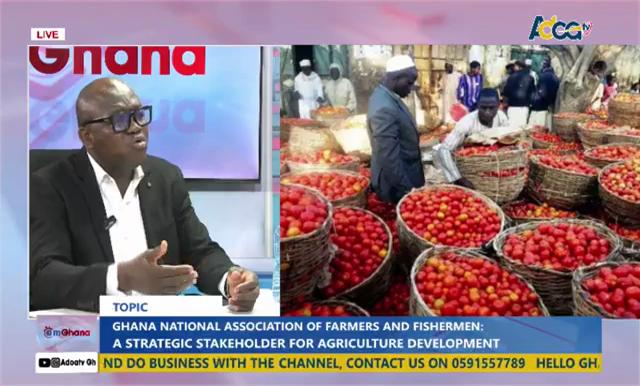
The National Secretary of the association, Dr. Abutu Kapori, tabled the solution during an interview on Adoa TV, a private broadcaster based in Ghana’s capital, Accra.
“Almost every community in this country has a chief. And in almost every community in this country, GNAFF is being represented. We have membership in all these communities. So, we as youth, it is up to us to liaise with GNAFF as an association so we collaborate with our chiefs who can release some lands for us.
“But if we looked at it at every point [complaining] that there is no land, the question is have we made any efforts to get land, and we are not getting? Have we made any efforts to have access to land, and it’s somehow not possible?” Dr. Kapori remarked.

He added: “There is no chief that you would [approach] and say you’re looking for land for agricultural purposes, and the chief would say I would not give you the land. Let’s try. Let’s knock. The doors would be opened. And we would take the opportunity.”
GNAFF laments the impact of illegal mining on fish farming
Illegal mining activities, according to the Ghana Chamber of Mines, deprive the state of an estimated $2.3 billion in revenue every year.
Research indicates that more than 60% of Ghana’s water bodies have been contaminated with mercury and cyanide by illegal miners.
Dr. Kapori lamented not only the toll of illegal mining on the country’s economic growth during the interview but also its impact on public health.

“One of the key challenges with the fishing sector, when it comes to our association, is the illegal mining activities. Currently, there is no pressure [as it was] earlier. That notwithstanding, there is a challenge. As we wash the chemicals into the water bodies, not just the fish alone, a lot of aquatic animals are affected.
“This goes a long way to affect the activities of our fishermen across the shores of rivers, streams or the sea, in the sense that many of the fingerlings are dying. That would have meant that the population of fish in the rivers and other water bodies would be reduced. So, indirectly, the supply of fish from our farmers or fish farmers to the markets would also reduce,” he said.

Continuing, he stated: “And, then, the question is, even if you go to harvest fish and you get a bumper harvest, the guarantee of it (the fish) being wholesome for consumption is in doubt because a lot of chemicals have been discharged into the water bodies and this goes to pollute or poison the fish.”
Source: Edward Adeti/Media Without Borders/mwbonline.org/Ghana/West Africa